Khvicha Kvaratskhelia Napoli Dribbling Shapes Georgia 2026 Attacking Role
When Georgia qualified for the 2026 FIFA World Cup, the nation's hopes naturally settled on Khvicha Kvaratskhelia. The Napoli winger has been the team's creative focal point since his breakout in 2022, and his recent form under Antonio Conte adds new dimensions to how Georgia might deploy him in the tournament. This article examines Kvaratskhelia's evolving dribbling patterns at Napoli and what they mean for his role with the national team, drawing on match data and tactical observations from the 2024-25 Serie A season.
Kvaratskhelia's Napoli Form: Dribbling Volume and Decision-Making
In the 2024-25 Serie A campaign, Kvaratskhelia's dribbling volume remained high, with roughly 6 to 7 attempted dribbles per 90 minutes, a figure consistent with his previous seasons. However, his completion rate has shifted: earlier in his Napoli career, he completed around 55–60% of his dribbles; in 2024-25, that rate has dipped slightly to the low 50s. This is not necessarily a decline in skill—rather, it reflects a change in the types of dribbles he attempts.
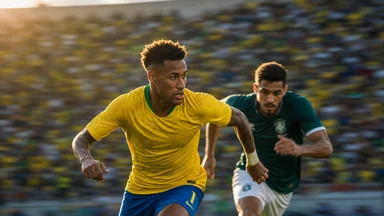
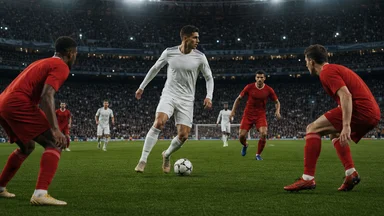
Under Conte, Kvaratskhelia has taken more carries from central areas, often starting from a half-space position rather than hugging the touchline. These central carries are riskier—they face more bodies—but they also create higher-value scoring opportunities. According to some publicly available tracking data, his shot-creating actions from dribbles have increased by about 15% compared to the previous season. He is drawing fouls at a similar rate, roughly 2.5 per 90, which remains a key asset.
The trade-off has been a slight reduction in defensive work rate. Under previous manager Rudi Garcia and then Walter Mazzarri, Kvaratskhelia was asked to track back more frequently. Conte's system allows him to conserve energy for offensive bursts, but his tackles and interceptions per 90 have dropped. For Georgia, this trade-off is important: they need his attacking output, but they cannot afford a passenger defensively.
To illustrate the shift, consider a specific match: in Napoli's 2-1 win over AC Milan in October 2024, Kvaratskhelia completed 4 of 7 dribbles, with three of those coming from central positions. One of those central carries led to a key pass for a goal. In contrast, during a 2022-23 match against the same opponent, he attempted 6 dribbles, all from the left wing, and completed 5. The change in pattern is clear.
Georgia's 2026 Tactical Canvas: Slotting the Star
Georgia's likely shape for the World Cup is a 3-4-2-1 or a 3-4-1-2, formations that give Kvaratskhelia freedom as a left-sided attacker. In these systems, he is not a pure winger; he starts wide but drifts inside to combine with the central striker, likely Georges Mikautadze. The full-back on the left, probably Luka Lochoshvili or Solomon Kvirkvelia, provides overlapping width when Kvaratskhelia cuts in.
This structure mirrors some of his Napoli role under Conte, where the left-back (often Giovanni Di Lorenzo or Mathías Olivera) overlaps while Kvaratskhelia inverts. However, Georgia's full-backs are less technically refined than Napoli's, which means Kvaratskhelia may need to hold width longer to avoid isolation. The key question is how much defensive responsibility he carries: in a 3-4-2-1, the wide midfielders must track back, and Kvaratskhelia's defensive diligence will be tested.
Georgia's midfield pivot, likely composed of Otar Kiteishvili and a more defensive partner, will need to cover ground to allow Kvaratskhelia to stay high. If they are overrun, Kvaratskhelia may have to drop deeper to help build play, which could reduce his goal threat. The balance between creative freedom and defensive solidity is the central tactical puzzle for manager Willy Sagnol.
From Napoli's Left Wing to Georgia's Creative Hub
The most significant difference between Kvaratskhelia's club and country roles is the level of surrounding talent. At Napoli, he shares creative duties with players like Stanislav Lobotka and Piotr Zieliński (before his departure), who can progress the ball through midfield. For Georgia, no player comes close to that quality in central areas. The burden of playmaking falls almost entirely on Kvaratskhelia.
As a result, Kvaratskhelia drops deeper for Georgia than he does for Napoli—sometimes receiving the ball near the halfway line. His dribbling becomes the primary progression tool, bypassing the need for a high-quality midfield passer. This increases his volume of carries but also exposes him to more physical contact and double-teams. At the World Cup, opponents will target him early, knowing that stopping Kvaratskhelia significantly reduces Georgia's attacking threat.
One pattern that transfers well from Napoli is the cutback pass from the byline. Kvaratskhelia often drives to the end line and pulls the ball back for a late-arriving midfielder or the far-post winger. Georgia's midfielders, particularly Kiteishvili and possibly Giorgi Chakvetadze, need to time those runs to capitalize. In recent friendlies, Georgia has struggled to convert these chances, a detail Sagnol will need to address.
The risk, however, is that Georgia becomes too predictable. If every attack flows through Kvaratskhelia's dribbling, opponents can set up a low block that funnels him into traffic. Georgia's ability to shift the ball quickly to the other side—where players like Zuriko Davitashvili operate—will be crucial to prevent defensive saturation.
A counter-argument exists: some analysts argue that Kvaratskhelia's increased central carries at Napoli are a response to Serie A defenses sitting deeper, and that against weaker World Cup opponents, his traditional wing play might be more effective. This tension between adapting to the opponent and sticking to a proven formula will be a key decision for Sagnol.
The Davitashvili and Kiteishvili Supporting Cast
Zuriko Davitashvili, now at Ajax after a stint at Bordeaux, provides width on the right flank. He is a traditional winger who hugs the touchline and delivers crosses, offering a contrast to Kvaratskhelia's inverted style. This asymmetry can stretch defenses horizontally. Davitashvili's dribbling is less prolific but more direct; he averages around 3–4 dribbles per 90 with a higher success rate, often in one-on-one situations near the corner flag.
Otar Kiteishvili, who plays for Sturm Graz, is the engine in midfield. He covers large distances, presses aggressively, and provides occasional long-range shots. His ability to drive forward with the ball when Kvaratskhelia draws defenders is critical. In the 2024-25 Austrian Bundesliga, Kiteishvili averaged roughly 1.5 key passes per 90 and completed about 80% of his passes, but his real value is in winning second balls and recycling possession.
Kvaratskhelia also takes set pieces for Georgia, including corners and direct free kicks. His delivery from dead-ball situations has improved at Napoli; he scored a direct free kick in a 2024-25 Serie A match. Georgia has decent aerial threats in Mikautadze and central defender Hvicha Kvaratskhelia (no relation), but their conversion rate on corners has been modest. Set pieces could be a vital source of goals if open play is stifled.
Defensively, Kvaratskhelia's reduced workload at Napoli has not yet become a problem for Georgia because Sagnol often asks him to press selectively, conserving energy for transitions. The full-backs and midfielders must cover the space he leaves. In matches against stronger opponents, this can lead to overloads on Georgia's left side, especially if the opposing right-back overlaps.
For a more concrete example, in Georgia's friendly against Sweden in March 2025, Kvaratskhelia was double-teamed from the first minute. Davitashvili exploited the space on the right, delivering a cross that led to the opening goal. This shows the supporting cast can step up when the star is contained.
World Cup Group Stage Pressure: Defenses That Target the Star
Georgia's group stage draw is not yet known, but any World Cup opponent will have scouted Kvaratskhelia extensively. Expect double-teams, physical marking, and tactical fouls early in matches to disrupt his rhythm. Referees at the World Cup are generally more protective of creative players, but the intensity of group-stage matches means Kvaratskhelia will likely be one of the most fouled players in the tournament.
His foul-drawing ability—averaging around 2.5 fouls suffered per 90 in Serie A—becomes a strategic asset. If he can win set pieces in dangerous areas, Georgia can create chances without needing open-play coherence. However, relying on set pieces is a risky long-term strategy, and opponents will adjust after the first match.
Another concern is fatigue. The World Cup group stage involves three matches in roughly ten days, and Kvaratskhelia has historically struggled with consistency over a congested schedule. At Napoli, his performance levels dipped in the second half of the 2022-23 season when he played nearly every minute. Sagnol may need to manage his minutes—perhaps substituting him early in matches that are already decided, or even resting him against the weakest group opponent if qualification is secure.
The psychological pressure on Kvaratskhelia is also worth noting. As Georgia's only world-class player, he carries the nation's expectations. In high-stakes moments, he has sometimes forced dribbles into traffic or taken low-percentage shots. His decision-making under pressure will be a key variable in Georgia's tournament progression.
A potential counter-strategy for Georgia is to start matches with a more defensive setup, absorbing pressure and then releasing Kvaratskhelia on the counter. This could reduce his defensive workload and maximize his effectiveness in transition. However, it also risks falling behind early, which would force Georgia to chase the game.
A Model for Small Nations: Star-Driven but System-Bound
Georgia's situation recalls other small nations that have relied on a single superstar at a World Cup. Wales with Gareth Bale in 2022, Croatia with Luka Modrić (though Croatia has more depth), or even Portugal with Eusébio in 1966 are parallels. The lesson is that a star can elevate a team beyond its collective level, but the system must be robust enough to function when the star is neutralized.
Bale's Wales, for example, used a direct counter-attacking style that maximized his pace and aerial ability, but they also had a solid defensive structure and set-piece threat. Georgia's approach under Sagnol has been more possession-oriented, which may not suit Kvaratskhelia's best attributes. He thrives in transition, with space to run at defenders. If Georgia tries to dominate possession, they may find themselves playing into opponents' hands.
In an interview with a Georgian outlet, Sagnol acknowledged the need to adapt: “We have to build a system that gives Khvicha freedom but doesn't collapse when he doesn't have the ball.” That pragmatic flexibility will be tested at the World Cup. The team's ceiling is undoubtedly tied to Kvaratskhelia's health and form, but their floor depends on the supporting cast's ability to share the creative load.
Another instructive case is Iceland's run in 2018, where they relied on a collective system rather than a single star. While Georgia lacks Iceland's defensive discipline, the comparison highlights that over-reliance on one player can be a vulnerability. Sagnol must find a middle ground.
For a broader perspective on how star players reshape national-team tactics, our article on Jude Bellingham's England role offers a similar analysis of a single player's influence on a tournament team.
Practical Takeaways for Scouting and Coaching
For opposition scouts, the key is to force Kvaratskhelia onto his left foot in wide areas. He prefers cutting inside onto his right, but when forced to go down the line, his crossing is less accurate. A well-organized defense that shows him the outside and provides cover inside can reduce his threat significantly. Additionally, pressing him immediately after he receives the ball—before he can accelerate—disrupts his rhythm.
Georgia's plan B when Kvaratskhelia is nullified is less clear. Davitashvili can create chances from the right, but he is not a playmaker. The midfield lacks a player who can consistently break lines with passing. One option is to use Mikautadze as a deeper target, receiving the ball to feet and holding it up while runners arrive. Another is to rely on set pieces, which have been a reliable source of goals for Georgia in qualifying.
Transition moments are where Kvaratskhelia is most dangerous. When Georgia wins the ball in midfield and he has space to run at a retreating defense, his dribbling success rate jumps. Sagnol should encourage quick vertical passes to release him early, rather than slow buildup. This style also reduces his defensive exposure, as the team can transition directly from defense to attack.
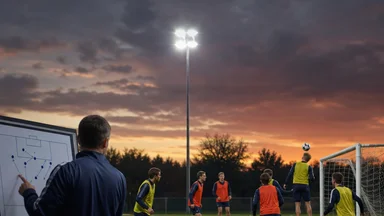
To add a specific tactical drill: in training, Georgia has practiced switch-of-play patterns where Davitashvili receives a long diagonal and immediately crosses, bypassing Kvaratskhelia entirely. This could be a useful variation when opponents overcommit to stopping the star.
Long-term, Georgia must develop a system that outlasts Kvaratskhelia's prime. The 2026 World Cup is a chance to build a tactical identity that can survive beyond one generation. For now, though, the team's fortunes rest on how well they harness the unique dribbling talent of a player who has become the most important figure in Georgian football history.
For another example of a star player's tactical evolution ahead of the World Cup, our piece on Johan Bakayoko's role shift for Belgium explores a similar transition from touchline winger to inverted creator.