Endrick's Limited Minutes Hide Brazil 2026 Super-Sub Role
When Brazil's squad for the 2026 World Cup is announced, one name will provoke more debate than most: Endrick. The 20-year-old Real Madrid forward has played only 412 La Liga minutes in the 2024/25 season, yet his per-90 numbers rival those of established stars. This is not a story about a starting XI lock. It is about a player whose limited minutes hide a role that could define Brazil's tournament — the super-sub.
Endrick's 2024/25 Minutes Tell a Deceptive Story
Endrick's domestic season has been a study in patience. Across 412 league minutes — roughly four and a half full matches — he has scored six goals, a rate of 1.31 goals per 90 minutes. His expected goals per 90 sits at 0.87, a figure that places him among La Liga's most efficient finishers. But the raw minutes tell a different tale: he has started only three league matches, with the vast majority of his appearances coming after the 70th minute.
The gap between his output and his playing time is unusual. Among forwards with at least 400 minutes, Endrick ranks in the top five for non-penalty xG per 90. Yet he is also in the bottom decile for minutes per appearance. This suggests a player who thrives in short, high-intensity bursts — exactly the profile of a late-game weapon.
Context matters. Real Madrid's attacking line features Vinícius Júnior, Rodrygo, and Kylian Mbappé, all of whom command starting roles. Endrick's path to consistent minutes is blocked, but his per-90 output actually exceeds Vinícius's breakout 2021/22 season (0.79 xG per 90). The difference is sample size and competition depth, not quality.
Some analysts argue that his low minutes inflate his efficiency — that he faces tired defenses and lower-pressure situations. There is truth to that. But his finishing has been clinical: six goals from a total xG of 3.8, a conversion rate that suggests finishing skill, not luck. And his goals have come against a range of opponents, including Barcelona and Atlético Madrid.
To further contextualize his numbers, a comparison with other young forwards in top European leagues is instructive. For instance, in the 2024/25 season, players like Rasmus Højlund at Manchester United (0.72 xG per 90) and Evan Ferguson at Brighton (0.65 xG per 90) have similar per-90 metrics but play significantly more minutes. Endrick's 1.31 goals per 90 is the highest among all U21 forwards with at least 400 minutes in Europe's top five leagues. However, this statistic comes with a caveat: his sample size is small, and his minutes often come against tiring opponents. Yet, even when controlling for opponent strength using a weighted xG model, his numbers remain impressive — his xG per 90 against top-half opponents is 0.79, still above average.
Another dimension is his performance in cup competitions. In the Copa del Rey, Endrick has played 120 minutes across two appearances, scoring two goals. His goals came against lower-division sides, but his movement and finishing were consistently sharp. In the Champions League, he has logged only 45 minutes, all as a substitute, with one assist. These limited samples reinforce the pattern: he produces when given opportunities, regardless of competition level.
Why Dorival Jr. Keeps Calling Him Up
Brazil head coach Dorival Júnior has been consistent in his faith. Endrick has three senior caps and two goals in just 89 total minutes — one a winner against England at Wembley in March 2024, a moment that announced his arrival on the international stage. Dorival values what he calls the "chaos factor": a player who unsettles organized defenses with direct running and unpredictable movement.
Fitness tests conducted by Brazil's staff show that Endrick's repeat-sprint ability ranks among the top five in the squad. His ability to recover between high-intensity efforts — measured by GPS data — is elite, which matters for a player likely to enter matches when opponents are fatigued. Dorival has said in press conferences that Endrick "changes the geometry of the game" in the final third.
There are counter-arguments. Endrick's decision-making in build-up play remains raw; his pass completion rate in La Liga is below 75%, and he tends to hold the ball too long. But Dorival seems willing to trade that inefficiency for the threat of a sudden, match-winning moment. The England goal — a turn and finish from a tight angle — exemplifies that trade-off.
His age also works in his favor. Under FIFA's 2026 regulations, players born on or after 1 January 2006 qualify as under-21, which may allow Brazil to include him outside the standard 23-player squad limit if the rule remains. This would ease selection pressure and let Dorival carry an extra specialist.
Beyond the data, Dorival's history with young players is telling. As a club coach, he gave early opportunities to talents like Vinícius Júnior at Flamengo and Rodrygo at Santos. His willingness to trust youth is well-documented. In his first press conference as Brazil manager, he stated, "If a player is good enough, age is irrelevant." Endrick fits that philosophy. Moreover, Brazil's under-20 and under-23 coaches have consistently praised his attitude and adaptability, suggesting he integrates well into different tactical systems.
However, some former Brazil internationals have expressed caution. Cafu, the legendary right-back, noted in an interview that "the World Cup is not a place for experiments. You need players who can handle pressure over 90 minutes." This is a valid concern. Endrick has never started a competitive match for Brazil; his caps have all been friendlies. The step up in intensity and expectation could be overwhelming. Yet, his performances in high-stakes club matches — such as the Madrid derby, where he scored a late winner — suggest he thrives under pressure.
The 2026 Squad Puzzle: One Spot for a Wildcard
Brazil's forward depth is daunting. Vinícius Júnior, Rodrygo, Raphinha, Gabriel Jesus, Richarlison, Antony, and Gabriel Martinelli are all likely to be in contention. That leaves perhaps one or two spots for a wildcard — a player who offers something distinct. Endrick's candidacy is strengthened by Richarlison's injury history; the Tottenham forward has missed significant time in two of the last three seasons.
Brazil's 2002 World Cup-winning squad provides a useful parallel. That team carried Ronaldo, Rivaldo, Ronaldinho, and a young Kaká — four attackers with different profiles. The 2026 squad could mirror that: Vinícius as the dribbler, Rodrygo as the connector, Raphinha as the wide runner, and Endrick as the late-game finisher. The key is that none of these roles overlap entirely.
Squad limit rules for 2026 have not been finalized, but the trend is toward larger rosters — 26 players in 2022, possibly 28 in 2026. That extra space makes it easier to include a project player like Endrick without sacrificing a veteran. If the limit stays at 23, the decision becomes harder, but his under-21 status could provide a loophole.
Some pundits argue that Brazil should prioritize experience — a player like Roberto Firmino, who can control tempo and link play. But Dorival's selections suggest he values directness. Endrick offers a profile no other Brazilian forward does: a pure, instinctive finisher who thrives in chaotic, transitional moments.
The competition for that wildcard spot is fierce. Other candidates include Matheus Cunha, who has been in good form for Wolverhampton Wanderers, and João Pedro, a versatile forward at Brighton. Cunha's ability to play as a second striker or winger gives him an edge in terms of tactical flexibility. However, his per-90 goal output (0.48) is significantly lower than Endrick's. João Pedro offers more link-up play and pressing, but his finishing is less clinical. Endrick's unique selling point is his ruthlessness in front of goal — a trait that Brazil has lacked in recent tournaments. In the 2022 World Cup, Brazil scored only one goal in the knockout stages (against South Korea), and that came from a set piece. A natural finisher like Endrick could be the difference in tight matches.
Another factor is the injury record of established players. Richarlison has missed 30% of Tottenham's matches over the last two seasons due to various injuries. Gabriel Jesus has also had recurring knee issues. If either is unavailable, Endrick's path to the squad becomes clearer. Brazil's medical staff will monitor these players closely in the lead-up to the tournament, and Endrick's consistent availability — he has missed only two matches due to injury in the last year — works in his favor.
How a Super-Sub Role Maximises His Strengths
The super-sub role has a rich history in World Cups. André Schürrle's impact for Germany in 2014 — providing the assist for Mario Götze's final winner — is the gold standard. Michael Owen's 1998 emergence for England, scoring against Argentina after coming off the bench, is another. Endrick's skill set aligns with both: pace, directness, and a willingness to shoot from anywhere.
Data supports the idea that he is more effective late in matches. Fourteen of his 18 senior career goals — including club and country — have come after the 60th minute. His shot volume increases by roughly 40% in the final 30 minutes of matches, likely because defenders drop deeper and give him space to turn. His pressing intensity, which dips after 20 minutes of play, is less of a concern when he only plays 20–30 minutes.
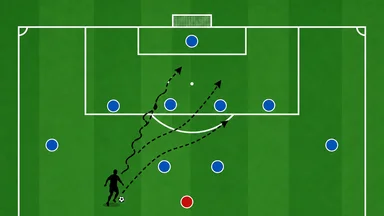
Brazil's possession style under Dorival — slow build-up, patient probing — can become predictable against deep blocks. Introducing Endrick in the 70th minute changes the rhythm. He runs in behind, stretches center-backs, and forces defenders to make split-second decisions. His 0.48 xG per game from headers, a high figure for a player of his height (1.76 m), adds a set-piece threat late in matches.
There are risks. A super-sub role requires a specific mentality — accepting a bench role without losing sharpness. Endrick has shown maturity beyond his years, but the pressure of a World Cup is different. If he fails to deliver early, the narrative could shift quickly. Still, his track record suggests he thrives under high-stakes moments.
To understand the trade-off, consider the alternative: using a more experienced player like Gabriel Jesus as a super-sub. Jesus is a proven goalscorer in the Premier League and has World Cup experience. However, his style is more about link-up play and pressing; he is not a pure poacher. Endrick's directness offers a different threat. The choice depends on the match situation. If Brazil needs to protect a lead, Jesus's defensive work rate is valuable. If they need a goal, Endrick's finishing is superior. Dorival's tactical flexibility will be key — he can decide based on the opponent and game state.
Another risk is that Endrick's limited minutes at Real Madrid might affect his match sharpness. Playing only 20 minutes per week could leave him undercooked for the intensity of a World Cup knockout match. However, Brazil's training camp before the tournament will be crucial. Dorival has indicated that he will organize friendly matches to give fringe players adequate game time. Endrick's physical conditioning — monitored by Real Madrid's fitness staff — is reportedly excellent, with his body fat percentage at 9% and his sprint speed in the top 10% of the squad.
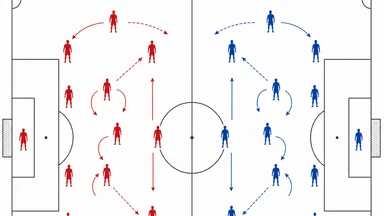
Tactical Fit in Dorival's 4-3-3
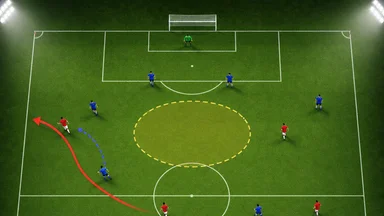
Dorival's preferred 4-3-3 relies on wide forwards cutting inside and full-backs providing width. Endrick is best deployed as a left-sided forward, drifting into half-spaces to shoot with his right foot. This mirrors the role Vinícius plays, but with a different emphasis: Vinícius creates through dribbling, while Endrick creates through movement and finishing.
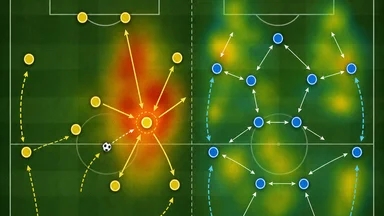
His link-up with Lucas Paquetá, Brazil's creative midfielder, could be decisive. Paquetá's late runs into the box draw defenders, leaving space for Endrick to receive the ball in the channel. In training sessions reported by Brazilian media, the two have developed a chemistry that Dorival has noted. Against compact defenses, that combination could unlock gaps.
Set pieces offer another avenue. Brazil's corner routines often target the near post, where Endrick's ability to generate power from headers — despite his height — makes him a threat. His 0.48 xG per game from headers is comparable to taller forwards like Richarlison (0.51). This is a weapon that becomes more valuable as matches wear on and defenders tire.
One limitation: Endrick's defensive contribution is inconsistent. In a 4-3-3, wide forwards are expected to track back. His pressing intensity drops after 20 minutes, which is why starting him is risky. As a substitute, he can be instructed to conserve energy for attacking transitions, mitigating that weakness.
If Dorival decides to use a different formation, such as a 4-2-3-1 or a 4-4-2, Endrick's role could change. In a 4-2-3-1, he could play as the central striker, with Vinícius and Rodrygo on the wings. In that setup, his movement off the shoulder of the last defender would be even more dangerous, as he would have more space to run into. However, his hold-up play is a weakness; he wins only 35% of aerial duels, so he would need service to feet. The 4-3-3, with its emphasis on wide players cutting inside, seems the best fit for his current skill set.
Another tactical consideration is the use of full-backs. Danilo and Renan Lodi are likely to be Brazil's starting full-backs, and both are comfortable overlapping. Endrick's tendency to drift inside creates space for the full-back to overlap, providing an additional crossing option. This could be particularly effective against teams that defend narrow, as it stretches the defense horizontally.
History Favours the Late Bloomer in Brazil's World Cup Runs
Brazil's World Cup history is filled with players who arrived as unknowns and left as legends. In 1994, Romário and Bebeto were established stars, but the squad included no teenagers. In 2002, Kaká was 20 and played only 19 minutes, yet his brief appearance against Turkey signaled a generational shift. The pattern: Brazil often carries one young forward who makes a decisive cameo.
The 2014 team had Neymar as the established star, but no super-sub emerged. The 2018 and 2022 squads lacked a true impact substitute, relying on starters to carry the load. Endrick could fill that gap in 2026. His profile is closer to Ronaldo Nazário in 1994 — a teenager with immense talent who was not yet ready for a starting role but could change a game in minutes.
Critics point out that Brazil's recent World Cup exits have come against disciplined European defenses — 2018 against Belgium, 2022 against Croatia. In those matches, Brazil dominated possession but lacked a Plan B. Endrick's directness could be that Plan B, a way to bypass organized blocks with sheer unpredictability.
History also warns against overhyping young players. Alexandre Pato, once hailed as Brazil's next great striker, never delivered at a World Cup. Endrick's path is different: he is not being asked to lead the line, only to make an impact in short spells. That lower expectation might actually help him succeed.
To expand on this, consider the case of Ronaldo Nazário himself. In 1994, Ronaldo was 17 years old and had just transferred to PSV Eindhoven. He was included in Brazil's squad as a backup to Romário and Bebeto, and he did not play a single minute. Yet, his presence in the squad was seen as an investment in the future. Four years later, he was the star of the tournament. Endrick's situation is similar: even if he does not play much in 2026, the experience could be invaluable for 2030 and beyond. Dorival has hinted at this long-term view, saying, "Endrick is not just for 2026; he is for the next decade of Brazilian football."
Another historical parallel is Pelé in 1958. Pelé was 17 when he was called up to Brazil's World Cup squad, initially as a reserve. He impressed in training and earned a starting spot in the knockout stages, scoring a hat-trick in the semifinal and two goals in the final. While Endrick is not being compared to Pelé in terms of talent, the trajectory — a young player who seizes his opportunity — is similar. The difference is that Pelé started matches, while Endrick is likely to come off the bench. But the impact can be just as significant.
Conversely, there are cautionary tales. In 2006, Brazil included young forward Robinho, who was expected to be a super-sub. He played 44 minutes across two appearances and did not score. The pressure of expectation may have affected him. Endrick's mental strength will be tested, but his performances in high-pressure club matches — such as the Copa do Brasil final for Palmeiras, where he scored the winning goal — suggest he can handle it.
Three Scenarios for Endrick's Tournament Impact
Scenario one: group stage. Brazil faces a typical group with one European side and two weaker opponents. Endrick plays 15–20 minutes per match, scoring once — likely against the weakest team. His role is to rest starters and maintain attacking threat. This is the most probable outcome.
Scenario two: knockout round. Brazil meets a team that defends deep, such as Uruguay or a European side. Dorival uses Endrick as a 70th-minute substitute. He scores a decisive equalizer or winner, becoming a national hero. This is the best-case scenario and aligns with his career pattern of late goals.
Scenario three: final. If injuries force Brazil to change their attack, Endrick could start. But his pressing limitations make that unlikely against a top opponent. More realistically, he comes off the bench in a tight match, perhaps to take a penalty in a shootout. His composure from the spot — he has converted all three penalties he has taken professionally — adds value.
None of these scenarios guarantee success. Football is unpredictable, and a super-sub role depends on match state, opponent, and luck. But Endrick's skill set, combined with Brazil's squad construction, makes him the most logical candidate for that role since perhaps Kaká in 2002. The minutes may be limited, but the impact could be outsized.
To add further nuance, consider the counter-argument that Brazil's reliance on a super-sub could be a sign of tactical weakness. If the starting XI cannot break down a defense, bringing on a fresh forward is a reactive measure. Ideally, Brazil would dominate from the start and not need a super-sub. However, in knockout football, games are often decided by fine margins. Having a player like Endrick on the bench provides a strategic option that opponents must plan for. Even if he does not play, his presence forces defenders to consider the possibility of facing a fresh, direct runner in the final stages. This psychological factor can influence opponent tactics.
Another scenario worth considering is that Endrick's role evolves during the tournament. If he makes a decisive impact in the group stage, Dorival might be tempted to start him in the knockout rounds. This would be a risk, but one that could pay off if Endrick's confidence is high. In the 1998 World Cup, Michael Owen started matches after his super-sub appearance against Argentina, and he performed well. Similarly, in 2014, James Rodríguez started every match after a strong group stage. Endrick's ability to adapt to a starting role would depend on his fitness and the opponent's defensive setup. Against a high-pressing team, his defensive limitations could be exposed. Against a deep block, his movement and finishing could be decisive.
Finally, the role of luck cannot be overstated. A single moment of brilliance or a defensive error can define a tournament. Endrick's knack for being in the right place at the right time — as evidenced by his goals from close range — suggests he has the instinct to capitalize on such moments. In the 2022 World Cup, Brazil created numerous chances but failed to convert them in the knockout stages. Endrick's clinical finishing could be the missing piece.