48-Team World Cup Shifts Squad-Building From 23-Player Plans to 26-Man Rotations
The 2026 FIFA World Cup will be the first to feature 48 teams, and with that expansion comes a fundamental change to squad composition. For the first time since 2002, the maximum squad size has increased—from 23 to 26 players. At first glance, three extra slots may seem modest, but they ripple through every phase of tournament preparation. The new format also introduces a round-of-32, meaning a team that reaches the quarterfinals will play four matches instead of three before the knockout rounds tighten. Combined with a compressed group-stage schedule, these changes transform how coaches build their rosters, plan rotations, and manage minutes.
48 Teams Breaks the 23-Player Ceiling
FIFA confirmed the squad-size increase in March 2023, responding to the demands of a longer tournament. The 23-player limit had been in place since the 2002 World Cup, when the tournament had 32 teams and a maximum of seven matches for finalists. In 2026, a team that reaches the final will play eight matches—one more than before—and the group stage alone spans roughly 14 days. The extra three slots allow coaches to carry five specialist options rather than the previous two or three.
The substitution math also shifts. With five substitutes allowed per match (a rule introduced during the pandemic and now permanent), a 26-man squad means a coach can name a matchday squad of 23—15 outfield players plus eight substitutes, or any combination that fits the new regulations. This effectively makes every player on the roster a potential contributor, reducing the likelihood of unused substitutes sitting idle for entire tournaments.
Some critics argue that 26 players dilute the prestige of making a World Cup squad—that the cut should remain at 23 to preserve exclusivity. But the practical reality of a 48-team tournament, with more matches and tighter travel, makes the expansion a necessity. As one UEFA technical observer noted, "You cannot ask players to play three games in nine days with only 23 bodies. The injury risk becomes unacceptable." The extra slots are less a luxury than a safety valve.
Round-of-32 Creates a Fourth Group Game
The most overlooked structural change is the round-of-32. In previous 32-team tournaments, the group stage was followed directly by the round-of-16. In 2026, the top two from each of the 16 groups advance to a single-elimination round-of-32. That means teams that finish second in their group will face a knockout match roughly 72 hours after their final group game, with no extra rest day.
This fourth match before the quarterfinals fundamentally alters tournament pacing. In the 2022 World Cup, for example, Argentina played three group matches, then a round-of-16, then a quarterfinal. In 2026, a team that reaches the quarterfinal will have played four matches in 18 days—the same number of matches as a 2022 finalist, but with one fewer rest day between the group stage and the knockout rounds. Accumulated fatigue from high-intensity pressing systems becomes a real concern.
Yellow-card accumulation rules also come into sharper focus. Under current regulations, a player is suspended after two yellow cards in the group stage, and the slate is wiped clean after the quarterfinals. With an extra match in the round-of-32, a player who picks up a yellow in each of the first two group games would miss the round-of-32. Coaches must now plan for potential suspensions across four matches rather than three, making squad depth a survival asset.
To illustrate, consider a hypothetical scenario: a team's starting center-back receives a yellow card in the first group match for a tactical foul. In the second match, he picks up another yellow for a late challenge. Under the old format, he would miss the third group match but could return for the round-of-16. In 2026, he would miss the round-of-32 instead, a knockout match where a single mistake could end the tournament. Coaches must therefore decide whether to rest key players in the second group game to preserve them for the knockout phase, a trade-off that adds strategic depth.
Rotation Cycles Lengthen From Six to Nine Days
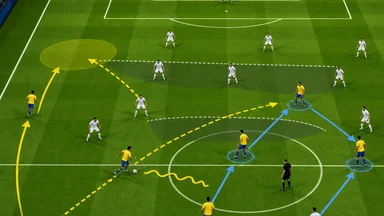
The group stage in 2026 will span roughly 14 days, with each team playing three matches. Rest between games shrinks to approximately 72 hours for some fixtures, particularly when teams play on day 1, day 4, and day 7. This compressed schedule demands that coaches plan two distinct starting XIs—one for the first two matches and another for the third, with potential crossover for key players.
In the 2022 World Cup, France rotated nine players against Tunisia in their final group game, having already qualified. That luxury may become standard practice in 2026, but the stakes are higher: a team that rotates too heavily risks dropping points and ending up in a more difficult knockout path. Coaches must balance load management with competitive necessity, a calculation that fitness staff now influence more directly than ever.
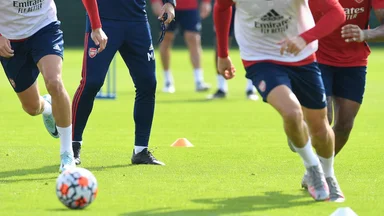
Some federations, such as Germany and England, have already begun testing two distinct lineups in friendly matches during the 2024–26 cycle. The idea is to build cohesion among two groups of players who may never share the pitch together in a competitive match but must be ready to perform on short notice. This represents a shift from the traditional model of a clear first-choice XI with backups, toward a more fluid rotation where the distinction between starter and substitute blurs.
Data from the 2022 World Cup shows that teams used an average of 21.5 players across the tournament. In 2026, that number could rise to 24 or 25, meaning nearly every squad member will see meaningful minutes. For example, Brazil in 2022 used 22 players; with a 26-man squad, they might have integrated an additional prospect like Vinícius Júnior earlier. The increased rotation also reduces the risk of burnout for star players: Lionel Messi played every minute of every match in 2022, a workload that might be mitigated in 2026 with a deeper bench.
Versatile Defenders Replace Specialist Full-Backs
With 26 slots, coaches can afford to carry fewer specialists and more dual-role players. Nowhere is this more evident than in defense. In a 23-man squad, a typical selection included two left-backs, two right-backs, and four centre-backs—eight defenders total. In a 26-man squad, that number might shrink to seven defenders, with one full-back slot replaced by a versatile centre-back who can shift wide, such as John Stones, Jurriën Timber, or Dayot Upamecano.
The logic is straightforward: a player who can cover both centre-back and full-back effectively provides two roles for one roster spot. This allows the coach to carry an extra midfielder or attacker, positions where rotation is more frequent. The archetype of the specialist full-back—a player who thrives only on the flank—becomes less valuable than the adaptable defender who can tuck into a back three or push into midfield.
Scouting departments are already adjusting their profiles. National team technical directors report that they now prioritize defenders who have played multiple positions at club level, even if they are not elite in any single role. The trade-off is clear: you sacrifice a marginal amount of positional excellence for greater tactical flexibility across a long tournament. Whether this trade-off pays off will be tested in the crucible of the round-of-32.
Consider the case of a player like Benjamin Pavard, who won the 2018 World Cup playing mostly as a right-back but has since developed into a center-back at club level. In a 23-man squad, his versatility might have been underutilized; in a 26-man squad, he becomes a valuable asset who can fill multiple roles without occupying a specialist slot. Conversely, a pure left-back like Jordi Alba, who offers little elsewhere, faces stiffer competition for a place.
Midfield Banks Stack Three Deep Instead of Two
Midfield is the engine room of any World Cup-winning side, and the 26-man squad allows coaches to stack three deep at each position. In 2022, Argentina carried five midfielders—Enzo Fernández, Rodrigo De Paul, Leandro Paredes, Alexis Mac Allister, and Exequiel Palacios—and used all of them at different stages. In 2026, a team might carry six midfielders, enabling two distinct double-pivot pairings and a dedicated playmaker who can start or close out games.
The benefit is clear: a team that presses high—like the Netherlands under Ronald Koeman or Spain under Luis de la Fuente—needs fresh legs in central midfield every 60 minutes. With six players, a coach can rotate the entire midfield bank without losing structural coherence. The box-to-box runner who covers 12 kilometers per game can be replaced by a like-for-like substitute, maintaining intensity into the final 30 minutes.
However, carrying six midfielders means sacrificing a slot elsewhere, typically in attack or defense. This forces a choice: do you prioritize control of the middle third, or do you stockpile forwards to chase goals in knockout games? The answer may depend on the opponent. Against a low-block team, an extra attacker might be more valuable; against a possession-dominant side, an extra midfielder could be decisive. The expanded squad gives coaches the flexibility to make that call match by match.
For instance, France in 2022 had a deep midfield with players like Adrien Rabiot, Aurélien Tchouaméni, and Youssouf Fofana, but they also carried only three forwards. In 2026, they could add a fourth forward like Randal Kolo Muani without dropping a midfielder, by using one of the extra slots. This flexibility allows for tactical pivots: if a team trails in a knockout match, they can bring on two attackers at once without depleting the midfield base.
Set-Piece Specialists Earn a Dedicated Slot
The third goalkeeper rule—which allows an extra specialist keeper without counting toward the outfield cap—has effectively freed a roster spot for a set-piece taker. In a 23-man squad, a dead-ball specialist who does not start regularly, such as James Ward-Prowse or Hakan Çalhanoğlu, was often left at home because the coach could not justify a slot for a player who might only take corners. With 26 players, that calculation changes.
A dedicated set-piece taker can travel without being a guaranteed starter, providing a tactical weapon off the bench or in specific match situations. The 2022 World Cup saw multiple goals from corners and free kicks—France's opening goal against Australia came from a set piece, and Morocco's run was built on defensive organization and set-piece efficiency. In 2026, with more matches and more rest days between knockout rounds, teams can prepare multiple set-piece routines tailored to different opponents.
Opposition analysts now face a broader scouting challenge. A team with two or three set-piece specialists can vary delivery types, decoy runs, and blocking schemes from match to match. The marginal gain from a well-rehearsed corner routine in a tight knockout game could be the difference between advancing and going home. As a result, federations are investing in dedicated set-piece coaches—a trend already visible in club football—and the 26-man squad makes it feasible to bring that expertise onto the traveling staff.
For example, England in the 2022 World Cup had only one specialist set-piece taker in Harry Kane, who was also the primary penalty taker. In 2026, they could bring a player like James Ward-Prowse, who has delivered over 15 Premier League assists from set pieces in recent seasons, without sacrificing a spot for a starting forward. Similarly, Turkey could include Hakan Çalhanoğlu for his free-kick prowess, even if he is not a guaranteed starter in midfield.
U21 Development Pathways Realign With 26 Spots
The expanded squad also opens doors for younger players. In 2022, Spain brought 18-year-old Pedri, who played limited minutes but gained invaluable tournament experience. In 2026, a coach can afford to carry one or two teenagers as rotational pieces, knowing that the extra roster spots reduce the risk of an unused substitute. The U20 World Cup becomes a pre-screening tool for senior team selectors, who can identify players who thrive in tournament environments.
Some federations are already adjusting their youth development programs. The German Football Association, for example, has increased the number of friendly matches between the U21 and senior teams, with an eye toward identifying players who can step into a 26-man squad without disrupting team chemistry. The 2026 cycle has already seen call-ups for 18-year-old talents like Lamine Yamal and Warren Zaïre-Emery, who might not have made a 23-man cut but are now realistic options.
The downside is that younger players may see fewer minutes than expected, as coaches lean on experienced performers in high-stakes matches. But the opportunity to be part of a World Cup squad, even as a rotational piece, accelerates development. The 2022 template of Pedri—low minutes, high impact—could become the norm for a generation of young players who break into senior squads earlier than their predecessors.
Federations also need to fund larger support staffs. A 26-man squad requires more physiotherapists, nutritionists, and logisticians. For smaller nations, this can strain budgets, potentially widening the gap between wealthy and developing football nations. The expanded squad is a double-edged sword: it offers more opportunities for players but also raises the cost of participation.
To mitigate this, FIFA could provide additional funding for travel and accommodation, but such measures are not yet confirmed. Smaller federations like Iceland or Costa Rica may need to rely on volunteer staff or partnerships with local clubs. The disparity in resources means that while the 26-man squad benefits deep talent pools, it could also exacerbate existing inequalities. Nonetheless, for most teams, the advantages of increased depth and flexibility outweigh the logistical challenges.
Goalkeeping Depth: Three Keepers Now a Minimum
With 26 slots, the third goalkeeper becomes a more active participant rather than an emergency option. In previous tournaments, the third keeper rarely played, but the expanded squad allows for a specialist penalty-saving goalkeeper or a sweeper-keeper who can be used in specific tactical scenarios. For instance, a team facing a penalty shootout in the round-of-32 might substitute a goalkeeper known for penalty saves, a luxury not feasible with a 23-man squad.
Additionally, the 26-man squad encourages coaches to select a goalkeeper who can contribute to build-up play, such as Manuel Neuer or Ederson, even if they are not the undisputed starter. This depth also protects against injuries: a team that loses its first-choice keeper in the group stage now has two capable backups, rather than one untested option. The psychological boost of knowing that a quality replacement is available can also reduce pressure on the starting goalkeeper.
In 2022, Brazil's third goalkeeper was rarely used, but in 2026, a team like Argentina might bring a young prospect like Gerónimo Rulli to gain experience, knowing that he can play in low-stakes group matches. This approach mirrors club football, where rotation is standard, and it could help develop the next generation of national team keepers.
Counter-Arguments and Trade-Offs
Not everyone welcomes the 26-man squad. Some purists argue that it dilutes the quality of the tournament, as weaker players make the cut. They point to the risk of tactical overload, where coaches overthink rotations and lose the cohesion of a settled XI. Historical evidence from club football shows that too much rotation can harm team chemistry, as seen in some Premier League sides that struggled to find rhythm during fixture congestion.
Moreover, the expanded squad may benefit teams with deeper talent pools disproportionately. Nations like Brazil, France, and Germany can fill 26 spots with world-class players, while smaller nations may struggle to find 26 players of international caliber. This could lead to more lopsided group-stage matches, reducing the competitive balance that made the 2022 World Cup exciting.
On the other hand, the round-of-32 introduces more knockout matches, increasing the chances for upsets. A team with a deep squad can manage fatigue better, but a team with a cohesive starting XI might still prevail if they execute well. The trade-off between depth and cohesion will be a central theme of the 2026 tournament, and coaches must find the right balance for their specific squad.
Ultimately, the 26-man squad is a response to the demands of a 48-team tournament. It shifts the focus from individual brilliance to collective resilience, from narrow specialization to broad versatility. As the 2026 World Cup approaches, the teams that adapt best to these structural changes will have a significant advantage. The days of the 23-man squad are over; the era of the 26-man rotation has begun.