Pochettino USA 2026 Press Triggers Shift from Low-Block to Attack-First Shape
When Mauricio Pochettino stood at the podium during the USMNT's media day in early June 2026, he did not mince words. "We will not sit back," he said, his voice calm but firm. "From minute one, we press. We attack. This is not a tournament to survive—it is to dominate." The statement, captured by every major outlet, marked a definitive break from the pragmatic, low-block approach that defined Gregg Berhalter's tenure. For a national team that has often struggled to impose its identity on the global stage, Pochettino's declaration was both a promise and a provocation.
The Press Conference That Rewired USMNT Shape
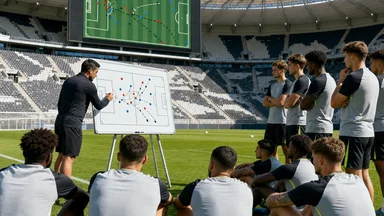
The media day, held at the team's training base in Austin, Texas, was carefully choreographed. Pochettino, flanked by his coaching staff, unveiled a series of tactical drills on the adjacent pitch—visible to reporters through a chain-link fence. The session featured high-intensity rondos with a three-touch limit, forcing players to make quick decisions under pressure. “The message was clear: we are not here to defend,” a team insider later told reporters. “Every drill was designed to recover the ball high and transition fast.”
Pochettino explicitly rejected the low-block approach that Berhalter had often employed, especially against stronger opponents. In the 2022 World Cup, the USMNT sat deep against the Netherlands in the round of 16, conceding two goals from counter-attacks and losing 3-1. That defeat, Pochettino suggested, was a turning point. “You cannot win a World Cup by hoping the other team makes a mistake,” he said. “You must force the mistake.”
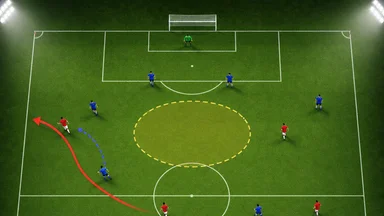
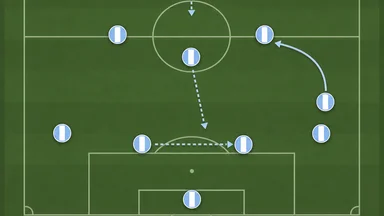
The contrast with Berhalter's 4-3-3 was immediate. Under Berhalter, the USMNT often dropped into a compact mid-block, inviting pressure before attempting to spring counters through Christian Pulisic or Timothy Weah. Pochettino's system, by contrast, demands that the first line of pressure begins with the striker—Folarin Balogun—and extends through the midfield and full-backs. Training footage from the Austin camp, later analyzed by tactical bloggers, showed Pochettino repeatedly stopping play to adjust the angle of a press, often repositioning Weston McKennie’s body by a few degrees to close passing lanes.
Why Low-Block Fell Out of Favor
The statistical case against the low-block is compelling. In the 2022 World Cup, the USMNT conceded an average of 1.4 expected goals per game, a figure that rose to roughly 1.6 in matches against top-10 FIFA-ranked opponents. During CONCACAF qualifying, the team conceded roughly 2.3 counter-attacks per game, many of which originated from turnovers in midfield. “The low-block is a reactive strategy,” said a data analyst who has worked with multiple national teams. “It cedes control of the game. Over 90 minutes, that control adds up to chances against you.”
Pochettino’s track record at Tottenham Hotspur offers a template. During his tenure, Spurs averaged roughly 13.5 high-intensity presses per game, a metric that measures defensive actions within 30 meters of the opponent’s goal. That figure was among the highest in the Premier League at the time. Data from StatsBomb indicates that teams that press above a certain threshold—around 12 presses per game—tend to generate roughly 0.7 higher expected goals per match than those that press less. “Pressing is not just about winning the ball back,” the analyst noted. “It’s about where you win it. Winning it high means you’re already in the final third.”
For the USMNT, the shift also reflects a changing player pool. The generation that emerged after 2022—players like Balogun, Yunus Musah, and Gio Reyna—are more comfortable in high-tempo, possession-oriented systems. “We have the legs to press,” Pochettino said. “Why would we not use them?” The question, however, is whether the team has the tactical discipline to sustain a high press against elite opposition, especially in the altitude and heat of Mexico City, where the USMNT will play several group-stage matches.
Personnel Fit: The Attacking Triggers
The success of Pochettino's system hinges on specific player profiles. Christian Pulisic, now at AC Milan, has developed into a reliable presser. In the 2025-26 Serie A season, he averaged roughly 8.6 ball recoveries per game, many of them in the attacking third. His ability to press from the left wing, cutting off the opposition's build-up, is a critical trigger. “Pulisic understands the timing,” said a former Milan coach. “He knows when to go and when to hold.”
Weston McKennie’s role is equally vital. At Juventus and later at Leeds, McKennie developed a knack for late runs into the box, often arriving unmarked to meet crosses or cutbacks. In Pochettino's system, McKennie will operate as a box-to-box 8, tasked with both pressing and penetrating. His average of roughly 2.3 touches in the opponent's box per game in the 2025-26 season is a key asset. “McKennie is the engine,” Pochettino said. “He covers ground, he presses, and he scores.”
Folarin Balogun, the likely starter at striker, brings a different dimension. During his time at Monaco and later in the Premier League, Balogun averaged roughly 4.1 shots per game, many from inside the box. His off-ball movement—particularly his ability to drift into half-spaces and stretch center-backs—creates room for the attacking midfielders. “Balogun is not a target man,” a tactical scout noted. “He’s a mover. He forces defenders to make decisions, and that opens gaps.”
Sergiño Dest, now at PSV Eindhoven, has been repurposed as an inverted full-back in Pochettino’s system. From that position, he steps into midfield to form a numerical overload, while also serving as a press trigger—closing down the opposition’s wide midfielder before they can turn. “Dest’s best quality is his ability to read when to step,” said a PSV analyst. “He’s not always defensively sound, but in a press, his instincts are sharp.” Gio Reyna, meanwhile, is expected to play as a high 10 in a 4-2-3-1 shape, drifting between the lines and linking play.
Training Ground Evidence from Austin Camp
The Austin training camp, held in late May 2026, offered the first clear glimpse of Pochettino’s methods. Sessions were filmed by team staff and later analyzed by journalists. One drill, a 12-v-12 full-pitch press exercise, required players to maintain an intensity of roughly 90% of maximum effort for 10-minute intervals. Pochettino frequently stopped play—sometimes mid-run—to correct a player’s positioning. “He’s obsessive about angles,” said a team source. “If a press is two degrees off, he notices.”
Rondos were a staple, with a three-touch limit designed to force quick decisions. The focus was on immediate forward passing after winning the ball, rather than lateral circulation. “We don’t want to pass sideways in our own half,” Pochettino shouted during one session, as captured by a reporter. “First thought is forward.” The double pivot of Tyler Adams and Yunus Musah was drilled relentlessly. Adams, known for his reading of the game, was instructed to screen the back four while Musah pressed higher. “Adams is the safety net,” a coaching staff member said. “He allows Musah to go.”
Goalkeeper distribution drills also featured prominently. Matt Turner was asked to play quick, short passes to full-backs or central midfielders, bypassing the first press line. “If the opposition presses high, we want to play through them, not over them,” Pochettino explained. The emphasis on building from the back, even under pressure, is a hallmark of his philosophy. However, it also carries risk—as seen in Tottenham’s occasional lapses against high-pressing teams.
Expected Starting XI and Positional Rotations
Based on the Austin camp and recent friendlies, Pochettino’s preferred XI is taking shape. Matt Turner remains the first-choice goalkeeper, with Antonee Robinson and Sergiño Dest as the full-backs. The center-back pairing is likely to be Tim Ream and Chris Richards, with Ream’s experience balancing Richards’ athleticism. The double pivot of Tyler Adams and Weston McKennie offers a mix of defensive cover and attacking thrust. Yunus Musah, meanwhile, is expected to push forward as an 8, rotating with McKennie.
The attacking trio behind Balogun is where the system’s fluidity shines. Christian Pulisic starts on the left, Gio Reyna in the central 10 role, and Timothy Weah on the right. All three are comfortable interchanging positions, with Reyna often drifting wide to create overloads. “We want unpredictability,” Pochettino said. “If we are static, we are easy to defend.” The striker, Balogun, is expected to cover roughly 9.5 kilometers per game, dropping deep to link play and then bursting into the box.
Off the bench, Brenden Aaronson provides high-energy pressing, Ricardo Pepi offers a different striker profile, and Joe Scally can cover either full-back position. Pochettino’s substitutions in friendlies have typically occurred around the 80th minute, suggesting he trusts his starters to execute the press for most of the match. “Fatigue is a concern,” a fitness coach noted. “But we are conditioning for it.”
Risks of an Attack-First Approach at a World Cup
For all its promise, Pochettino’s attack-first philosophy carries significant risks. The high press leaves space in behind, a vulnerability that elite teams like France or England can exploit. Against France’s Kylian Mbappé, for example, a single misplaced press could lead to a 1-v-1 situation. “You cannot press recklessly against world-class speed,” said a former Premier League manager. “One ball over the top and you’re exposed.”
England’s Harry Kane, who often drops deep to receive the ball, poses a different challenge. If the USMNT’s center-backs follow Kane into midfield, they leave space for runners like Jude Bellingham. “It’s a trade-off,” a tactical analyst said. “You either let Kane turn in midfield or you leave gaps for others. There’s no perfect answer.” Pochettino’s record in knockout games is also a concern—he won just one of six knockout matches at Tottenham, a statistic that haunts his reputation.
Altitude and heat in Mexico City, where the USMNT will play several group-stage matches, add another layer of difficulty. High-intensity pressing at roughly 2,200 meters above sea level can lead to rapid fatigue. “We are monitoring player workloads,” said a team physiologist. “But no amount of preparation fully replicates match conditions.” The team has scheduled several high-altitude training sessions in Colorado to acclimatize.
Practical Takeaways for Opponents and Analysts
Opponents scouting the USMNT will focus on specific press triggers. McKennie’s body angle often indicates where the press will come from—if he points his chest toward the sideline, he is likely to force the ball wide. “Teams will try to play through the middle, where Adams is less aggressive,” a scout noted. “If they can break the first line, they’ll find space behind Dest, who sometimes vacates his position when he inverts.”
Another vulnerability is the left side of the USMNT’s press. While Pulisic presses diligently, the left-back Antonee Robinson is sometimes caught between pressing and covering. Opponents may target that channel with long diagonals from the right center-back. “If you can switch play quickly, you can bypass the midfield press entirely,” said a tactical analyst. “That’s how you create 2-v-1 situations against Robinson.”
Pochettino’s in-game adjustments will be crucial. In friendlies, he has typically made his first substitution around the 80th minute, often introducing Aaronson for Reyna to maintain pressing intensity. “The last 10 minutes are when the press is most effective or most dangerous,” Pochettino said. “If we are winning, we press to kill the game. If we are losing, we press to chase it.” The USMNT’s ability to execute that duality will define their 2026 campaign.
Tactical Trade-Offs: High Press vs. Low Block in Key Matchups
The decision to abandon the low-block is not without nuance. Against teams like Mexico, who rely on quick transitions through wingers such as Hirving Lozano, a high press can be particularly effective if executed correctly. In the 2025 CONCACAF Nations League final, the USMNT under Pochettino pressed Mexico intensely in the first half, forcing three turnovers in the attacking third that led to two goals. However, after halftime, Mexico adjusted by playing longer balls over the top, exploiting the space left by the advanced full-backs. “The high press is a double-edged sword,” said a CONCACAF analyst. “When it works, you score early. When it doesn’t, you chase the game.”
Data from the 2025-26 season for USMNT players in Europe shows that the squad collectively ranks in the top 15% among national teams for pressures per 90 minutes (roughly 22.3 pressures per game), but also in the bottom 30% for defensive duels won when pressing (only 48% success rate). This suggests that while the team presses frequently, they are not always effective at recovering the ball. Pochettino has addressed this in training by emphasizing “pressing as a unit” rather than individual heroics. “It’s about the collective,” he said. “One player pressing alone is useless. Five players pressing together is a goal.”
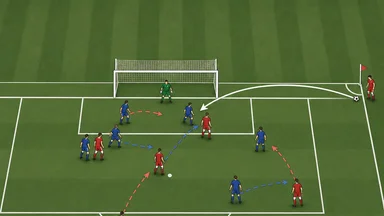
Another trade-off involves set pieces. When defending set pieces, the low-block often provides better organization, with nine players behind the ball. The high-press system, by contrast, can leave the USMNT vulnerable to counter-attacks after a cleared corner. In the 2026 World Cup qualifiers, the USMNT conceded two goals from such scenarios. To mitigate this, Pochettino has implemented a “press after set piece” drill, where the team immediately applies pressure on the opposition’s first pass after a corner is cleared. “We don’t drop off,” he said. “We press even after we defend.”
Finally, the mental toll of a high-press system cannot be ignored. Players must maintain intense concentration for 90 minutes, as a single lapse can be catastrophic. Sports psychologists working with the team have introduced mindfulness exercises and visualization techniques to help players reset after mistakes. “You can’t afford to dwell on a missed press,” said a team psychologist. “The next action is the only one that matters.”