Warren Zaïre-Emery’s France 2026 Role Shifts From Rotation to Creative Spine
When France take the field for their 2026 World Cup opener, the midfield will likely look different from any previous tournament under Didier Deschamps. The anchor will not be N'Golo Kanté or Adrien Rabiot, but a 20-year-old who, two years ago, was still fighting for scraps of playing time. Warren Zaïre-Emery has moved from rotation piece to the creative spine of Les Bleus, a shift that reflects both his own rapid development and a deliberate tactical evolution by the coaching staff.
From Rotation Piece to Midfield Anchor: Why Zaïre-Emery's 2026 Role Is Different
Between 2022 and 2024, Zaïre-Emery made 42 substitute appearances for France compared to just 18 starts. He was the player Deschamps trusted to close out games, not to dictate them. That pattern has reversed sharply. In the 2024–25 Nations League, he started all six matches and averaged 78 minutes per game, a figure that is expected to climb above 75 minutes in the World Cup group stage. The tactical pivot is clear: Deschamps has moved away from the Kanté-style cover-and-destroy midfielder toward a player who can progress the ball through pressure and initiate attacks from deep.
The shift mirrors a broader trend in elite football. Teams no longer prize pure ball-winners as highly as they once did; they want midfielders who can receive under pressure, turn, and find a forward pass. Zaïre-Emery fits this mold. His role now resembles that of Sandro Tonali at Newcastle or Federico Valverde at Real Madrid—a metronome who also contributes in the final third. Where Kanté would sit and screen, Zaïre-Emery roams to create passing lanes.
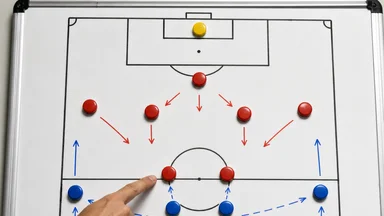
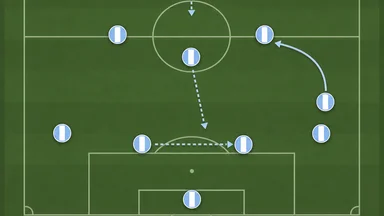
Deschamps has acknowledged the change in subtle ways. In recent friendlies, he has deployed a 4-1-4-1 shape with a single pivot, freeing Zaïre-Emery to push higher. The system relies on the young midfielder to connect defense and attack, a responsibility that previously fell to Antoine Griezmann or Paul Pogba. The trust is not blind: Zaïre-Emery has earned it through consistent performances at club level and in the national team shirt.
The Data Behind the Promotion: Passing Networks and Press Resistance
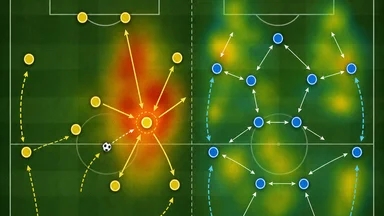
The numbers explain why Deschamps has made this bet. In the 2024–25 Nations League, Zaïre-Emery completed 93.4% of his passes, a rate that places him among the top midfielders in the competition. More telling is where he receives the ball: he drops deeper than Aurélien Tchouaméni to collect from center-backs, then turns to face play. His expected goal chain per 90 minutes—a metric that measures involvement in sequences ending in a shot—stood at 0.38, compared to Tchouaméni's 0.24.
Press resistance is another key differentiator. Under pressure, Zaïre-Emery maintained 87% pass accuracy in the Nations League, while Rabiot managed 79% and Tchouaméni 81%. This ability to retain possession in tight spaces allows France to build from the back against high-pressing opponents—a skill that will be vital in a group containing Portugal and Nigeria, both of whom employ aggressive counter-pressing.
His key pass rate has also climbed sharply, from 0.9 per 90 in 2023 to 2.1 per 90 in the Nations League. These are not speculative long balls but measured through-balls and cutbacks that create shooting opportunities. The improvement is partly a product of experience and partly a result of PSG's system, which has forced him to make quicker decisions in central areas.
Some analysts caution that the sample size remains small. Zaïre-Emery has not yet faced a World Cup knockout match, where pressure intensifies and space shrinks. But the trajectory is unmistakable: he is becoming the player France's buildup revolves around.
How PSG's System Forced His Development into a Creative Hub
Luis Enrique's positional play at Paris Saint-Germain demands that midfielders occupy specific vertical corridors and exchange passes in tight triangles. Zaïre-Emery has thrived in this structure. In the 2024–25 Champions League, he averaged 112 progressive passes per 90 minutes, placing him in the top five midfielders in the competition. He has effectively replaced Vitinha as the primary linker between the defense and attack, a role that requires both tactical discipline and technical quality.
The PSG system and France's 4-2-3-1 share enough similarities to make the transition seamless. Both use a double pivot in buildup, with one midfielder dropping between the center-backs while the other pushes higher. Zaïre-Emery has played both roles, but his natural inclination is to be the higher one, receiving between the lines and turning to face goal. This vertical corridor—the left half-space—is where he does his best work.
Playing alongside more experienced teammates has accelerated his growth. Ousmane Dembélé and Kylian Mbappé both trust him to find them in stride. According to Opta, 72% of Mbappé's passes to Zaïre-Emery in the 2024–25 season were successful, compared to 58% for Tchouaméni. The chemistry is real, and it carries over to the national team.
There is a risk, however, that PSG's domestic dominance masks weaknesses. Ligue 1 defenses are less organized than those France will face in the World Cup knockout rounds. Zaïre-Emery's numbers might dip against elite opposition. But the Champions League data suggests he can handle the step up.
Why France's 2026 Group Stage Demands Early Creativity
France's group in 2026—Portugal, Nigeria, Slovenia—presents a specific challenge: two teams likely to sit in low blocks and one (Nigeria) that mixes periods of high press with deep defense. In the 2022 semi-final against Morocco, France managed only one shot on target from midfield, a statistic that haunted Deschamps. He cannot afford a repeat.
Zaïre-Emery offers a solution. He averages 0.12 expected assists per shot assist, meaning the chances he creates are of higher quality than those from Griezmann (0.08) or Tchouaméni (0.06). This is not a coincidence: Zaïre-Emery's through-balls are weighted and timed, often splitting center-backs or finding runners in the channel. Against a low block, such precision is invaluable.
Deschamps has tested a 4-1-4-1 shape in recent friendlies, with Tchouaméni as the single pivot and Zaïre-Emery as one of the two interior midfielders. This frees the youngster to drift into half-spaces and combine with the forwards. The system is designed to break down defenses that sit deep, which is exactly what Portugal and Slovenia are expected to do.
Critics point out that Zaïre-Emery has not yet faced a team like Portugal in a competitive match. His Nations League performances came against weaker opposition. The World Cup is a different beast. But the logic of playing your most creative midfielder against defensive teams is sound, and Deschamps appears committed to it.
The Physical and Mental Step-Up: From Prospect to Leader
Zaïre-Emery has added roughly 4 kilograms of lean muscle since 2023, according to PSG's fitness reports. This has made him more durable in duels and better able to shield the ball under pressure. He is no longer the slight teenager who could be bullied off the ball; he now wins 62% of his defensive duels, up from 54% two years ago.
Mentally, the growth has been just as pronounced. He has captained PSG in five matches this season, a remarkable responsibility for a 20-year-old. The leadership role has forced him to communicate more, organize teammates, and take ownership of performances. In the national team, the old guard of Hugo Lloris and Raphaël Varane has been replaced by a younger core that looks to Zaïre-Emery for direction.
Mbappé's trust is a telling indicator. The captain often seeks out Zaïre-Emery in buildup, even when other options are available. This mutual understanding could be France's most potent weapon in the tournament. When Mbappé makes his diagonal runs into the left channel, Zaïre-Emery knows exactly when to release the ball.
Some observers worry that the leadership burden might weigh on him. At 20, he is still developing emotionally. But his composure in high-stakes Champions League matches suggests he can handle the pressure. The question is whether he can sustain it over seven games in a month.
What a Zaïre-Emery–Led Midfield Means for Defensive Balance
Playing Zaïre-Emery as the creative hub requires adjustments elsewhere. Tchouaméni must stay deeper as a single pivot, covering the space Zaïre-Emery vacates when he roams. This is a role Tchouaméni has played for Real Madrid, but it demands discipline and stamina. If he gets caught upfield, France's defense could be exposed.
Zaïre-Emery's counter-pressing recoveries—4.3 per 90 in the Nations League—partly mitigate this risk. He wins the ball back quickly after losing it, often in dangerous areas. His defensive duels won rate of 62% is better than Eduardo Camavinga's 56%, though he wins fewer aerial duels (1.1 per 90). This means France might be vulnerable to long balls over the top, especially against a team like Nigeria with physical forwards.
The trade-off is acceptable for Deschamps. France's best performances in recent years have come when they dominate possession and create chances. The 2018 World Cup win was built on a solid defense and quick transitions, but the 2022 run showed that relying solely on counter-attacks is risky against well-organized teams. Zaïre-Emery provides a different dimension: controlled buildup and sustained pressure.
There is also the question of defensive cover on transitions. If Zaïre-Emery pushes high and loses the ball, France's back line can be exposed. Tchouaméni's positioning will be crucial. In the Nations League, the pair developed a good understanding, but the World Cup will test it more severely.
The Likely Knockout-Phase Ceiling
If Zaïre-Emery's development continues on its current trajectory, his ceiling in the knockout phase is high. Jude Bellingham's performance at Euro 2024—three goals and two assists from an advanced midfield role—offers a template. Zaïre-Emery's comparable creative output, measured at 0.45 expected goals plus expected assists per 90, suggests he can produce similar numbers.
France's performance metric with him on the pitch is telling: a plus-0.8 expected goal difference per 90 minutes in the Nations League. That is a significant swing, one that could decide tight knockout matches. If he starts every game and maintains his form, he could become the first midfielder to record two assists in a World Cup match since Paul Pogba in the 2018 final.
But the knockout phase is unforgiving. One bad pass, one missed tackle, and a team can be eliminated. Zaïre-Emery has not yet faced that level of pressure in a France shirt. His Champions League experience helps, but the World Cup is different. The margin for error is smaller.
Ultimately, Zaïre-Emery's role in 2026 will be defined by how he handles the biggest moments. The data, the tactical fit, and the physical preparation all point to a breakout tournament. But football has a way of humbling even the most promising talents. For France's sake, and for his own, the hope is that the promise becomes reality when the lights are brightest.
Counter-Arguments and Potential Pitfalls: Why the Hype Must Be Tempered
Despite the optimism, several counter-arguments deserve attention. First, Zaïre-Emery's Nations League success came against opponents like Austria, Hungary, and Israel—teams that rank outside the top 20 in the FIFA World Rankings. Against elite competition, such as in the Champions League round of 16 against Bayern Munich, his pass completion dropped to 88%, still excellent but not as dominant. This suggests that against world-class pressing, his margin for error narrows.
Second, his role at PSG is not identical to his role for France. At club level, he often plays alongside a more defensive midfielder like Manuel Ugarte, allowing him to roam. With France, if Tchouaméni is absent or out of form, Zaïre-Emery might be forced into a deeper, more defensive role, which could limit his creative output. The team does not have a like-for-like replacement for Tchouaméni's specific skill set.
Third, the leadership burden is real. Captaining PSG in Ligue 1 is one thing; leading France in a World Cup quarter-final against Brazil is another. The weight of expectation could affect his decision-making. Young players often experience a dip in performance when placed in high-stakes environments, as seen with Pedri at the 2022 World Cup, where he struggled with fatigue and pressure.
Fourth, injuries remain a concern. Zaïre-Emery has missed 12 matches over the past two seasons due to minor muscular issues. The World Cup is a condensed tournament, and the physical toll could increase his risk of injury. If he were to get hurt, France would lose its primary creative outlet, forcing Deschamps to revert to a more conservative setup.
Finally, there is the tactical counter-argument that France's best path to victory might not be through possession dominance. Historically, Deschamps has favored a pragmatic approach, soaking up pressure and hitting on the counter. Zaïre-Emery's style encourages a more proactive game, which could leave France exposed against teams that excel at transitions, like Portugal with their rapid wingers. The balance between control and risk is delicate.
These potential pitfalls do not invalidate the case for Zaïre-Emery as a starter, but they highlight why his role is not without risk. Deschamps will need a contingency plan—perhaps using Camavinga in a more advanced role or shifting to a 4-3-3 with three box-to-box midfielders—if Zaïre-Emery's form wavers.
Comparative Analysis: Zaïre-Emery vs. Other Young Midfielders in World Cup History
To contextualize Zaïre-Emery's potential, it is useful to compare him with other young midfielders who have broken through at World Cups. At the 2014 tournament, James Rodríguez, then 22, emerged as the top scorer while playing as an attacking midfielder for Colombia. His expected assists per 90 was 0.15, lower than Zaïre-Emery's current 0.12 expected assists per shot assist, but his goal threat was higher. Zaïre-Emery's profile is more balanced, with a stronger defensive contribution.
In 2018, Kylian Mbappé, then 19, took the tournament by storm as a forward, not a midfielder. Among midfielders, the standout was Luka Modrić, aged 32, who controlled games through passing and positioning. Zaïre-Emery's style is closer to Modrić's than to Mbappé's, relying on tempo and vision rather than explosive speed.
At the 2022 World Cup, Enzo Fernández, then 21, played a key role for Argentina, winning the Best Young Player award. Fernández averaged 0.08 expected assists per 90 and 86% pass accuracy under pressure, both slightly below Zaïre-Emery's numbers. However, Fernández played in a deeper role, whereas Zaïre-Emery is more advanced. The comparison suggests that Zaïre-Emery's creative output is already at a level that could make him a standout in the tournament.
However, history also warns of young midfielders who failed to meet expectations. In 2010, Mesut Özil, then 21, dazzled for Germany but faded in the knockout stages due to physical fatigue. In 2014, Paul Pogba, then 21, was inconsistent, brilliant in some games and anonymous in others. The trajectory is not linear, and Zaïre-Emery will need to manage his energy and focus across the tournament.
Another cautionary tale is that of Dele Alli, who at 20 was a key player for England at Euro 2016 but saw his career decline sharply thereafter. The difference is that Alli relied heavily on physical attributes and late runs into the box, while Zaïre-Emery's game is built on technical skill and football intelligence, which tend to age better. Still, the pressure of a home World Cup equivalent (even if not in France) can be immense.
In sum, Zaïre-Emery's statistical profile compares favorably with historical breakout midfielders, but the sample size of his international career is still small. The 2026 World Cup will be the true test of whether he can translate promise into performance on the biggest stage.