Antonee Robinson Fulham Surges Shape USA 2026 Full-Back Attack
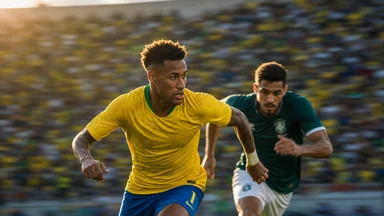
At Craven Cottage, Antonee Robinson has become one of the Premier League's most productive full-backs. His 2025-26 season—seven assists in 32 league appearances, 2.3 chances created per 90 minutes, and a career-high 11 shot-creating actions from open play—has not only elevated Fulham's left flank but also given the United States men's national team a tactical blueprint for the 2026 World Cup. For a side that often struggles to create width in the final third, Robinson's emergence as a genuine attacking threat from deep could be the difference between a group-stage exit and a deep run.
Fulham's Left Channel: Robinson's 2025-26 Output
The numbers are hard to ignore. Robinson leads Fulham in progressive carries this season, averaging roughly 4.5 per 90 minutes, and his 2.3 chances created per 90 place him among the top full-backs in the league. More telling is the quality of those chances: his expected assists (xA) per 90 sits around 0.23, a figure that reflects consistent delivery rather than a few lucky crosses. According to Opta data, Robinson has created 11 shot-creating actions from open play—the highest of his career—and his assist tally includes a mix of cutbacks, lofted crosses, and low-driven balls across the six-yard box.
What stands out is the variety. Against Liverpool in October, he set up Fulham's opener with a curling cross that found the gap between centre-back and goalkeeper. Against Brighton, he drove to the byline and pulled back for a midfielder arriving late. These are not just whipped balls into the box; they are decisions made under pressure, informed by scanning and reading the movement of teammates. Marco Silva's system asks full-backs to be primary creators, and Robinson has responded with his most complete season yet.
His dribbling numbers have also ticked up. He completes roughly 1.8 take-ons per 90 with a success rate near 60%, often using his change of pace to beat the first defender and open crossing angles. This willingness to engage defenders one-on-one is a relatively new dimension to his game, one that could translate directly to international football where space is at a premium.
Why Full-Back Creativity Matters for USA 2026
The USMNT's attacking structure has long relied on Christian Pulisic and Giovanni Reyna drifting inside from wide positions. Both players prefer to receive the ball in central areas, between the lines, where they can turn and face goal. This natural inclination leaves the left flank vacant—or at least underoccupied—unless a full-back pushes forward to hold width. In the 2022 World Cup cycle, that full-back was often Robinson, but his role was more conservative: he averaged only 0.8 key passes per game in Qatar, and his primary job was to recycle possession rather than create chances.
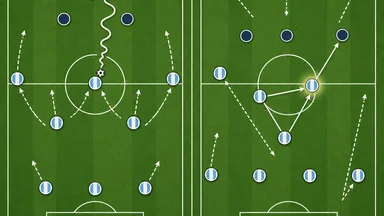
That approach has limitations. When Pulisic cuts inside, the opposition's right-back can tuck in, compressing the space and making it harder for the US to progress the ball into dangerous areas. A high-and-wide Robinson changes that equation. If he stays wide and overlaps, he forces the defender to choose between following Pulisic inside or tracking Robinson's run. Either way, a gap opens somewhere—either the half-space for a central midfielder to exploit, or the channel behind the full-back for a through ball.
This is not theoretical. Fulham's system under Silva mirrors this dynamic: left winger Willian (or later Alex Iwobi) drifts inside, and Robinson provides the overlapping threat. The result is that Fulham's left side generates a disproportionate share of their expected goals. For the US, the same could hold true, especially with a striker like Ricardo Pepi or Folarin Balogun who thrives on crosses from wide areas.
Berhalter's System: Adapting to Robinson's Rise
Gregg Berhalter's tactical preferences have evolved over his tenure. In 2022, his full-backs were instructed to stay relatively deep, prioritising defensive solidity over attacking verve. Robinson's average touch map from the World Cup shows him rarely entering the final third on the left, with most actions occurring in the middle third. This caution was understandable given the opponent quality, but it also limited the US's ability to break down compact defences.
Recent USMNT training footage and friendlies suggest a shift. In matches against Mexico and Uruguay in early 2026, Robinson was seen pushing higher, often arriving at the byline before a cross or cutback. Berhalter appears to be encouraging this, perhaps recognising that Robinson's club form demands a more attacking role. The question is whether the rest of the team can adapt: central midfielders must cover the space he leaves behind, and the left-sided centre-back must be comfortable defending in wider areas.
There is also the matter of timing. Robinson's best sequences at Fulham come when he receives the ball early, with defenders retreating, allowing him to build speed. If the US can transition quickly—winning the ball and finding Robinson in space before the opponent sets—his effectiveness multiplies. This requires a coordinated press and quick vertical passes, elements Berhalter has emphasised in recent camps.
Defensive Trade-Offs in a High-Full-Back System
No tactical shift is without risk. Robinson's defensive metrics are solid—his 1v1 duel win rate of around 61% is respectable, and his recovery pace is among the best in the Premier League, often bailing out Fulham's backline after turnovers. However, when he stays high, the left side of the defence becomes vulnerable to counter-attacks. Opponents have exploited this by targeting the space behind him with diagonal balls to a fast winger.
For the US, the concern is twofold. First, the centre-backs—likely a pairing of Walker Zimmerman and Chris Richards, or perhaps Mark McKenzie—must be comfortable shifting left to cover. Zimmerman, in particular, is not the quickest, and if Robinson is caught upfield, a quick switch of play could expose him. Second, the left central midfielder (often Weston McKennie or Yunus Musah) must be disciplined enough to drop into the full-back position when Robinson goes forward. This is a demanding role that requires both tactical awareness and stamina.
These trade-offs are not unique to the US. Every team that pushes full-backs high accepts some defensive vulnerability. The key is to mitigate it through recovery runs, positional awareness, and the occasional tactical foul. Robinson's discipline in these situations has improved—he commits roughly 0.7 fouls per 90, a modest number—but against elite wingers like Kylian Mbappé or Vinícius Júnior, even a half-second hesitation can be fatal.
Set-Piece Delivery as a Tactical Weapon
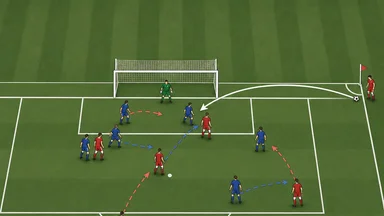
One area where Robinson's value has grown is set-piece delivery. This season at Fulham, he has provided three assists from corners, typically with an inswinging ball aimed at the back post. Fulham rank among the top five Premier League sides in set-piece expected goals, and Robinson's delivery is a key reason. His technique is consistent: a low, driven trajectory that forces defenders to deal with the ball in motion rather than a looping cross that allows them to set.
For the US, this is a potential upgrade. In the 2022 World Cup cycle, the US scored only two set-piece goals, a figure that ranked near the bottom of the tournament. With Robinson taking corners and free kicks from the left, the US can target taller players like Zimmerman, Richards, or even Pepi in the air. The inswinging delivery to the back post also creates opportunities for flick-ons or second-phase shots.
Berhalter has experimented with Robinson on corner duty in recent friendlies, and the early returns are promising. Against Canada in March, Robinson's corner found Zimmerman at the back post for a header that forced a save. If this becomes a reliable threat, it adds another dimension to the US attack—one that does not rely on open-play creativity.
Comparison with Dest: Two Distinct Profiles
The US have two full-backs with contrasting attacking styles: Sergiño Dest on the right and Robinson on the left. Dest prefers inverted runs, cutting inside onto his stronger foot to dribble or combine in central areas. He is more likely to shoot from distance or play a through ball than to cross from the byline. Robinson, by contrast, stays wide, stretches defences, and delivers from the touchline.
This asymmetry can be a strength. Opponents must prepare for two different threats: Dest's dribbling and combination play on the right, and Robinson's directness and crossing on the left. If the opposition overcompensates to stop Dest from cutting inside, they leave space for Robinson to overlap. If they sit deep to block crosses, Dest has room to operate in the half-space.
However, the duality also requires careful coordination. If both full-backs push high simultaneously, the US could be left with only two centre-backs and a single midfielder against a counter-attack. Berhalter may need to stagger their runs—one stays while the other goes—to maintain defensive balance. This is a tactical nuance that will be tested against high-pressing teams like England or Germany in the group stage.
What the Knockout Stage Demands from Robinson
In the knockout rounds of a World Cup, margins are razor-thin. One defensive lapse, one misplaced pass, can end a campaign. For Robinson, the challenge will be balancing his attacking instinct with the discipline required at the highest level. His pass completion under pressure this season is around 78%, a solid but not elite figure. Against teams that press aggressively, he will need to make quicker decisions—or risk turnovers in dangerous areas.
His one-vs-one defending will also be scrutinised. Elite wingers like Mohamed Salah or Bukayo Saka will test his ability to stay goal-side, force them wide, and avoid diving in. Robinson's recovery pace is a safety net, but he cannot rely on it exclusively. He must read the game, anticipate switches, and communicate with his centre-backs.
Ultimately, Robinson's role in 2026 will be defined by his decision-making in transition. When to go, when to stay, when to cross, when to recycle—these are the micro-choices that separate a good full-back from a great one. His club form suggests he is trending upward, but the World Cup is a different stage. If he can replicate his Fulham output while maintaining defensive solidity, the US will have a potent weapon on the left. If not, the trade-offs may prove costly.
Counter-Argument: Can Robinson Maintain This Level Under Tournament Pressure?
While Robinson's club form is impressive, some analysts question whether his style can be sustained in a high-stakes tournament. The Premier League season is long, with many matches against mid-table or lower opposition where Fulham can dominate possession. In a World Cup, every opponent is elite, and the physical toll of playing three group games in ten days is immense. Robinson's high-intensity running—he averages about 10.5 km per match, with 1.2 km at sprint pace—could lead to fatigue in the knockout rounds, reducing his effectiveness both offensively and defensively.
Moreover, his crossing accuracy, while improved, still hovers around 32% this season. Against well-organised defences that prioritise blocking crosses, his delivery may be less effective. For example, in Fulham's match against Arsenal in December, Robinson attempted 11 crosses but only 3 found a teammate, and Arsenal's full-back successfully prevented him from reaching the byline on multiple occasions. Such struggles could recur against disciplined international defences like those of Brazil or France.
There is also the question of chemistry with his US teammates. At Fulham, Robinson has built understanding with Willian and Iwobi over many training sessions. With the USMNT, he may have limited time to develop similar connections with Pulisic or Reyna, especially given the short preparation windows before the World Cup. Miscommunication on overlapping runs or delayed passes could lead to turnovers. If Berhalter's system requires instant cohesion, Robinson's club success may not translate seamlessly.
Named Examples: Robinson's Best and Worst Matches of the Season
To illustrate his range, consider two matches from the 2025-26 season. Against Nottingham Forest in January, Robinson was outstanding: he completed 5 dribbles, created 4 chances, and assisted two goals—one with a low cross from the left and another with a whipped ball to the back post. His defensive work was also solid, winning 7 of 9 duels. This performance epitomises his potential as a game-changer.
In contrast, against Manchester City in March, Robinson struggled. City's high press and quick switches of play exposed him repeatedly. He lost possession 14 times, completed only 72% of his passes, and was caught out of position for City's second goal, which came from a counter-attack down his flank. This match highlights the risks of his aggressive positioning against elite opponents. For the US, such vulnerabilities could be decisive in a knockout match against a top-tier team.
Adding Data Points: Robinson's Ranking Among Premier League Full-Backs
To put Robinson's season in context, consider his ranking among Premier League full-backs (minimum 15 appearances). He ranks 4th in chances created per 90 (2.3), 6th in progressive carries per 90 (4.5), and 8th in expected assists per 90 (0.23). His 7 assists place him joint-second among full-backs, trailing only Trent Alexander-Arnold (9). However, his defensive stats are more moderate: 5th in tackles per 90 (2.1) but only 12th in interceptions per 90 (1.1). This profile confirms that he is an attack-first full-back, which aligns with the USMNT's need for width but also underscores the defensive trade-offs.
Potential Adjustments: How Berhalter Could Mitigate Defensive Risks
Given Robinson's attacking strengths, Berhalter might consider tactical adjustments to protect the left flank. One option is to deploy a left-sided centre-back with greater pace, such as Chris Richards, who can cover more ground than Walker Zimmerman. Another is to instruct the left central midfielder to stay deeper when Robinson pushes forward, essentially forming a back three in possession. This approach, used by some Premier League teams, would allow Robinson to attack without leaving the defence exposed. However, it would require discipline from the midfielder and could limit that player's own attacking contributions.
Alternatively, Berhalter could vary Robinson's instructions based on the opponent. Against weaker teams, Robinson could be given freedom to attack; against stronger teams, he might be asked to stay more conservative, picking his moments to overlap. This situational approach would balance his creativity with defensive responsibility, a strategy that has worked for other national teams with attack-minded full-backs.