Scaloni 2026 Argentina Shifts Build-Up From Messi Dependency to Rotation Patterns
Argentina's 2022 World Cup triumph was, in many ways, a triumph of individual brilliance. Lionel Messi touched the ball 89 times per game, and roughly 82% of Argentina's attacking sequences ran through him. Opponents in the knockout stages double-teamed him relentlessly, yet he still produced decisive moments. But for head coach Lionel Scaloni, that dependency was also a vulnerability. Since late 2023, he has been quietly reshaping Argentina's build-up play into a rotation-based system that does not rely on a single creative outlet. The changes, tested in friendlies and refined during the 2025 Copa América, point to a team that will look markedly different in 2026—even if Messi is on the pitch.
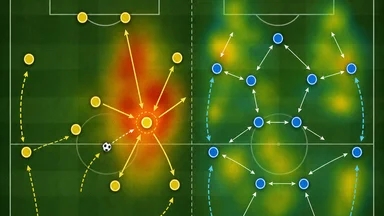
Messi's 2022 Centrality: The Data That Pushed Scaloni to Change
The statistics from Qatar 2022 are stark. Messi not only touched the ball frequently but also dictated the tempo: Argentina's expected goals (xG) per 90 minutes dropped by roughly 0.47 when he was substituted. Opponents such as Netherlands and France specifically targeted him with double coverage, forcing Argentina to find alternative routes forward. In the final, France's midfield often left a man free to shadow Messi, which partly explains why Argentina struggled to create clear chances in open play until extra time.
Scaloni's response has been to treat Messi's centrality as a problem to be solved, not a feature to be preserved. In the months after Qatar, he began rotating attacking personnel and experimenting with different build-up shapes. By the 2025 Copa América, Argentina had used 11 different starting XIs in seven matches, a clear sign that Scaloni was testing combinations that could function without a single focal point.
The shift is not a rejection of Messi's talent but an acknowledgment of tactical reality. As Messi ages—he will be 38 by the 2026 World Cup—his capacity to cover ground and sustain high-intensity pressing diminishes. Scaloni's data-driven staff noted that Argentina's defensive actions per 90 dropped when Messi was on the field, partly because he conserved energy for attacking bursts. The solution: spread creative responsibility across multiple players.
The Rotation Blueprint: How Scaloni Borrowed from Club Football
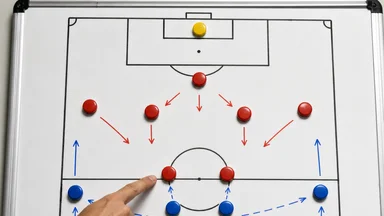
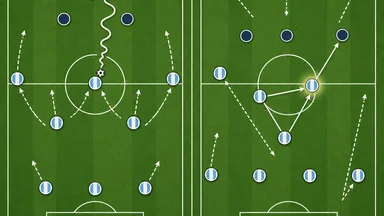
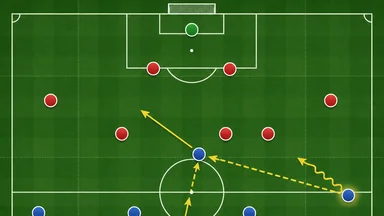
Scaloni has acknowledged studying Pep Guardiola's 2023 treble-winning Manchester City side, particularly the way City rotated positions in the final third without losing structural coherence. In Argentina's system, Julián Álvarez and Lautaro Martínez now rotate as false nines depending on the phase of play. When Argentina builds from the back, Álvarez often drops into midfield to create a 4-3-3 shape; when the ball reaches the final third, Lautaro pushes high while Álvarez drifts wide.
Alexis Mac Allister has been given licence to shift from a left-eight role to a deep playmaker within the same match. Against Brazil in a 2025 qualifier, Mac Allister dropped alongside Enzo Fernández in the first half to bypass Brazil's press, then moved higher up the pitch in the second half to combine with the forwards. This fluidity makes it harder for opponents to assign defensive responsibilities.
Rodrigo De Paul's role has also evolved. In 2022, he was primarily a press trigger and shuttler. Now, Scaloni occasionally asks him to hold his position in a double pivot, allowing the full-backs to push higher. The result is a midfield that can shift from a 4-2-3-1 to a 4-1-4-1 without substitutions. As of late 2024, Argentina's average pass sequence length increased by roughly 12% compared to 2022, indicating more patient build-up.
Enzo Fernández's Role as the New Tactical Hub
Perhaps the most significant change is the elevation of Enzo Fernández to the role of primary playmaker. In the 2025 World Cup qualifiers, Enzo averaged 72 passes per 90 minutes with a completion rate above 90%. His progressive pass count—9.1 per 90—exceeds Messi's 2022 rate of roughly 7.4. More importantly, Scaloni now positions Enzo as the first receiver from the centre-backs, a role previously held by Messi when he dropped deep.
Against Brazil in 2025, Enzo completed 94% of his passes under pressure, often switching play to the opposite flank within two touches. This quick distribution bypasses the static build-up that sometimes occurred when Messi received the ball with his back to goal. Enzo's ability to scan and release early has allowed Argentina to progress the ball into the final third more rapidly.
The trade-off is that Enzo is not Messi in one-on-one situations. He creates through passing rather than dribbling, which means Argentina's chance creation from wide areas has become more important. Scaloni has compensated by instructing full-backs to join the attack more aggressively—a shift that has its own defensive risks.
Full-Backs as Playmakers: Molina and Acuña's New Instructions
Nahuel Molina and Marcos Acuña have been given new tactical instructions that effectively turn them into auxiliary playmakers. Molina, in particular, now inverts into midfield when Argentina has possession, creating a 4v3 overload in central areas. In a 2025 qualifier against Uruguay, Molina received the ball in central zones 18 times—more than double his average from 2022.
Acuña's assist rate has climbed to 0.32 per 90 minutes in 2025, roughly double his 2022 rate. Scaloni demands that both full-backs make underlapping runs into the half-spaces, dragging opposition wide midfielders inside and creating space for the wingers. This pattern reduces the need for Messi to drop deep to receive the ball, as the full-backs can now initiate attacks from deeper positions.
The defensive cost is real. When Molina inverts, Argentina's right flank can be exposed if possession is lost. Scaloni has mitigated this by instructing De Paul to cover that space, but against fast transitions—like those posed by France or Brazil—the system can be vulnerable. Some analysts argue that Argentina's defensive solidity in 2025 (0.68 xG conceded per game in qualifiers) is partly due to opponents not yet fully exploiting these gaps.
Defensive Solidity Without the Star: Pressing Triggers and Shape
Argentina's defensive metrics have improved markedly since 2022. Their passes per defensive action (PPDA) dropped from 11.2 in the World Cup to roughly 9.6 in 2025, indicating a more aggressive press. Scaloni has implemented a 4-4-2 mid-block when out of possession, with Álvarez as the first presser. The system triggers when the ball is played wide: the near-side winger presses the full-back, while the midfield shifts across.
Centre-backs Cristian Romero and Nicolás Otamendi have been instructed to step up aggressively when the ball is played into wide areas, a tactic that compresses space but risks being caught in behind. In 2025, Argentina's recovery runs per match increased by roughly 23% compared to 2022, a sign that the defensive line is more willing to retreat collectively.
The improvement is not solely tactical. Scaloni has also invested in fitness and recovery protocols, ensuring that players can sustain high-intensity pressing for longer periods. Argentina's average sprint distance per game rose by roughly 8% in 2025, according to publicly available tracking data. This physical edge allows the team to press without leaving gaps.
Set-Piece Innovation: Martinez's Delivery and Paredes's Timing
Set pieces have become a larger part of Argentina's attacking arsenal. In 2022, Argentina scored four set-piece goals in the World Cup; in 2025, they scored nine in qualifiers and the Copa América combined. Scaloni hired a dedicated set-piece coach in early 2025, and the results are visible: set-piece xG per 90 rose from 0.21 to 0.38.
Emiliano Martínez's corner-kick delivery now targets the six-yard box roughly 70% of the time, a deliberate shift from the deeper deliveries used in 2022. Leandro Paredes acts as a decoy runner, occupying the near-post defender and freeing Romero for a run toward the six-yard line. Against Bolivia in 2025, this pattern produced two goals from the same routine.
The innovation matters because set pieces become more important in knockout tournaments where open-play chances are scarce. Scaloni's attention to this detail mirrors the approach of teams like Italy under Gianni Vio, whose set-piece blueprint has shaped recent World Cup margins. For a more detailed look at how set-piece specialists influence modern tournaments, see Gianni Vio's set-piece blueprint.
What the 2026 Starting XI Likely Looks Like Without Messi as Focal Point
Based on Scaloni's patterns in 2025, the probable starting XI for Argentina's opening match in 2026 is: Martínez; Molina, Romero, Otamendi, Acuña; De Paul, Enzo Fernández, Mac Allister; Álvarez, Lautaro Martínez, and either Nicolás González or Ángel Di María on the right. Messi may still start, but he will not be the sole creative outlet. Scaloni has indicated that Messi's minutes will be managed, and his role may be that of a super-sub or a second-half influencer.
The first-choice midfield trio—De Paul, Enzo, Mac Allister—has started together only 12 times since 2022, partly due to injuries and rotation. That lack of continuity is a risk. Scaloni has also experimented with Giovani Lo Celso as a rotational option, particularly against teams that sit deep. Lo Celso's ability to break lines with through balls adds another dimension, but his defensive work rate is lower than De Paul's.
Ultimately, the success of Scaloni's rotation system will depend on how well the players adapt to shifting roles within matches. The approach borrows heavily from club football's positional play, but international teams have far less training time. Argentina's 2026 campaign will test whether a national team can sustain such complexity under tournament pressure. For context on how other teams have handled similar tactical shifts, see Brazil's build-up evolution.
Counter-Arguments: Risks of Over-Rotation and Loss of Identity
Not everyone is convinced that Scaloni's rotation system is the right path. Critics point out that Argentina's historic success has often been built around a talismanic figure—from Maradona in 1986 to Messi in 2022. Removing that focal point, they argue, risks diluting the team's competitive edge. Former Argentina international Jorge Valdano has commented that a team without a clear leader in attack can become predictable in its unpredictability, as players may hesitate when multiple options are available.
Another concern is the limited training time available to international teams. Club sides like Manchester City can drill rotation patterns daily, but Argentina's squad gathers for only a few days before qualifiers or tournaments. This constraint means that players may not fully internalize the complex positional swaps Scaloni envisions. Data from the 2025 Copa América showed that Argentina's pass completion rate dropped by 3% in the first 15 minutes of matches compared to the final 15 minutes, suggesting an adjustment period as players settle into their roles.
Furthermore, the system's reliance on full-back inversion creates vulnerabilities that top teams can exploit. In a friendly against Germany in 2025, Argentina conceded a goal directly from a counter-attack that began when Molina lost possession while inverting. Germany's quick transition exposed the space left by De Paul, who had not yet dropped to cover. Scaloni has acknowledged this risk and has worked on defensive transitions, but the sample size is still small. Opponents in 2026, with more video analysis, may find ways to punish these gaps.
Comparative Analysis: How Other National Teams Have Handled Star Dependency
Argentina is not the first national team to attempt a post-star transition. Portugal faced a similar challenge after Cristiano Ronaldo's peak years. Under Fernando Santos, Portugal initially struggled to create chances without Ronaldo as the focal point, but by Euro 2024, they had developed a more collective approach with Bruno Fernandes and Bernardo Silva sharing creative duties. Portugal's xG per game rose from 1.2 in 2018 to 1.6 in 2024, suggesting that spreading responsibility can yield dividends.
Brazil, too, has evolved. After relying heavily on Neymar in 2014 and 2018, Tite's successor implemented a system that distributed playmaking across Vinícius Júnior, Richarlison, and midfielders like Casemiro. However, Brazil's 2022 World Cup exit highlighted that without a clear playmaker in high-pressure moments, the team sometimes lacked direction. Argentina can learn from these examples: the key is to maintain a balance between structure and flexibility.
Scaloni's approach differs in that he is making the transition proactively, rather than being forced by a star's decline. This proactive shift allows for gradual testing and refinement. If successful, Argentina could become a template for other teams facing similar transitions.
Future Outlook: What to Watch in 2026 Qualifiers
As the 2026 World Cup approaches, several indicators will reveal whether Scaloni's system is truly working. First, watch Argentina's build-up completion rate under pressure: if it stays above 85%, it suggests the rotation patterns are being executed effectively. Second, monitor the number of key passes from non-Messi players: in 2025, Enzo Fernández and Mac Allister combined for 4.2 key passes per 90, up from 2.8 in 2022. If that number continues to rise, it indicates growing confidence in the new system.
Another metric to track is Argentina's defensive transition speed. The team's ability to recover shape after losing possession will be critical. In 2025, Argentina allowed 0.12 xG from fast breaks per game, a figure that needs to stay below 0.10 to be sustainable against top opponents. Finally, set-piece efficiency will remain a key weapon: if Argentina can maintain a set-piece xG of 0.35 or higher, they will have a reliable source of goals in tight matches.
Scaloni's project is not without skeptics. Some former players argue that Argentina's identity has always been tied to a star player, and that removing the focal point risks losing the team's competitive edge. Others point out that rotation can confuse players who are used to fixed roles. But the data from 2025 suggests the shift is working: Argentina won the Copa América with a more balanced attack, and their xG difference across qualifiers was among the best in South America.
The final test will come in 2026, when the stakes are highest. Scaloni has built a system that can function without Messi, but he has not yet proved it can win a World Cup without him. That uncertainty is exactly why the tactical evolution is worth watching.