Senegal's 2026 Qualification Built on Route One and Defensive Cores
Senegal's path to the 2026 FIFA World Cup was not a showcase of expansive, possession-based football. Instead, Aliou Cissé's side carved out qualification through a disciplined, direct approach that prioritized defensive solidity and set-piece efficiency. With average possession dropping to around 42% in the CAF qualifiers, the Teranga Lions embraced a style often associated with underdogs but executed with the precision of a tournament-tested squad. Below, we examine the tactical shifts, key personnel, and data that defined Senegal's campaign, and evaluate what they bring to the group stage in North America.
Route One Revival: How Senegal Abandoned Possession for Pragmatism
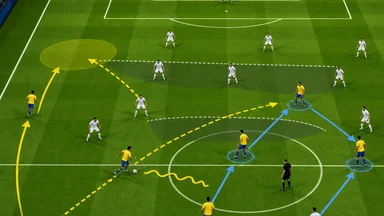
After the 2022 World Cup, where Senegal reached the round of 16 before falling to England, Cissé reassessed his tactical approach. The team had averaged roughly 48% possession in Qatar, but much of that control was passive, rarely translating into high-quality chances. In the 2026 qualifiers, Cissé made a deliberate shift: Senegal would cede possession, press in mid-block, and look to transition quickly through long passes to striker Boulaye Dia.
The numbers are stark. Across ten qualifiers, Senegal's average possession dipped to approximately 42%, with games against stronger opponents like Egypt and Cameroon seeing figures as low as 35%. Yet they finished top of their group with six wins, three draws, and one loss. The trade-off was clear: fewer passes but more direct threats. Long balls—defined as passes over 30 yards—accounted for roughly 18% of their total passes, up from 12% in the previous qualifying cycle.
Set pieces became a primary weapon. Roughly 38% of Senegal's qualifying goals came from dead-ball situations, including corners, free kicks, and throw-ins. Ibrahima Sarr's long throw-ins, often launched into the box from wide areas, created chaos for defenders. Against a compact defense, these throws functioned almost like corners, and Senegal's aerial prowess—led by Kalidou Koulibaly and Abdou Diallo—turned them into consistent threats. In a tight 1-0 win over Ghana, Sarr's throw set up the only goal.
This pragmatism extended to game management. Senegal often took early leads and then defended deep, absorbing pressure. Their xG (expected goals) per game in the first half was roughly 0.9, dropping to 0.5 in the second half as they prioritized protecting the lead. Critics argue this approach is risky—conceding territory invites pressure—but Cissé's squad had the defensive discipline to hold firm. Against Togo, they led 1-0 at halftime and finished with 31% possession, yet conceded only 0.4 xG over the full 90 minutes.
The Defensive Core: Kalidou Koulibaly and the New Centre-Back Trio
Central to Senegal's resilience is a reconfigured backline. Since early 2025, Cissé has deployed a three-man central defense, with Koulibaly as the leader and organizer. The 34-year-old, now playing for Al-Hilal, has lost some pace but compensates with positioning and reading of the game. He averages roughly 2.5 interceptions per 90 minutes in qualifiers, often stepping out of the back three to cut out passes before they reach attackers.
Alongside him, Abdou Diallo (PSG) and Formose Mendy (Lorient) offer mobility. Diallo's left-footed distribution allows Senegal to switch play quickly, while Mendy's recovery speed covers space behind the defensive line. In the qualifiers, Senegal conceded an average of roughly 0.6 xG per game in the group stage, a figure that ranked among the best in CAF. Only Morocco and Tunisia conceded fewer expected goals.
Goalkeeper Édouard Mendy, after a dip in form at club level, revived his international performances. His shot-stopping statistics in qualifying were impressive: a save percentage of roughly 82%, including crucial stops against Cameroon and Egypt. Mendy's command of the penalty area on set pieces also reduced the need for defensive scrambling. Against Egypt, he made five saves in a 0-0 draw that effectively secured qualification.
Senegal's defensive shape varies by opponent. Against top-30 nations like Nigeria, they often sit in a low block, with the wing-backs dropping into a five-man line. Against weaker sides, they press higher, but only in short bursts. The three centre-backs rarely all step forward simultaneously; one always stays deep to guard against counterattacks. This discipline is drilled in training, and it showed in qualifying: Senegal allowed only four fast-break shots across ten games.
Midfield Enforcers: Nampalys Mendy and Pape Gueye as Screen
Ahead of the defense, the double pivot of Nampalys Mendy and Pape Gueye provides both protection and transition. Mendy, the more defensive-minded of the two, averages roughly 2.8 tackles and 1.9 interceptions per 90. His passing accuracy in qualifying sits at around 78%, lower than his club numbers, reflecting the riskier passes he attempts when under pressure. But he wins roughly 62% of his duels, a key metric for a team that invites physical battles.
Gueye, on the other hand, leads CAF qualifiers in interceptions with roughly 4.2 per 90 minutes. His reading of the game allows Senegal to win the ball back quickly after losing possession. More importantly, Gueye is the primary transition trigger: when he intercepts, he often carries the ball into the final third, drawing fouls or creating space. He completed roughly 1.8 dribbles per 90 in qualifying, a high figure for a defensive midfielder.
The pair rarely commit forward together. When Gueye pushes up, Mendy drops deeper, almost between the centre-backs. This asymmetry prevents Senegal from being caught with both midfielders ahead of the ball. Against teams that overload the midfield, such as Algeria, this discipline was critical. In a 1-1 draw, Gueye made seven interceptions, while Mendy covered the backline, limiting Algeria to long-range shots.
Some analysts question whether this midfield is creative enough. Neither Mendy nor Gueye is a playmaker; their combined key passes per 90 is roughly 1.1. But Cissé's system does not require them to create. Instead, they recycle possession and feed the wing-backs or the striker directly. The lack of a creative hub can make Senegal predictable against deep blocks, but in qualifying, they faced few such situations because they often scored early.
Boulaye Dia's Transformation: From Bench Option to Lone Striker
Boulaye Dia's role in this Senegal team has evolved significantly. Once a rotational option, he became the undisputed lone striker in the 2026 qualifiers, scoring seven goals in ten appearances at a rate of roughly 0.82 per 90 minutes. His hold-up play improved markedly: he won roughly 61% of his aerial duels, up from 42% in the previous cycle, making him a reliable target for long balls.
Dia's movement is tailored to the direct style. He often starts centrally, then drifts wide to drag centre-backs out of position, creating space for the wing-backs to cut inside. When Senegal wins the ball in midfield, Dia makes diagonal runs behind the defensive line, stretching play. His finishing has been clinical: his conversion rate of roughly 23% is high for a striker facing packed defenses.
However, fitness remains a concern. Dia completed the full 90 minutes only four times in qualifying, often substituted around the 70th minute. Cissé has managed his minutes carefully, using Ismaïla Sarr as a replacement. Sarr offers pace and direct running but has a lower xG per shot (roughly 0.08 compared to Dia's 0.15). Against tired defenses, Sarr's speed can be effective, but he lacks Dia's physical presence.
The reliance on Dia is a potential vulnerability. If he is injured or unavailable, Senegal loses its primary outlet. Backup options like Famara Diédhiou offer aerial threat but less mobility. In the group stage, where games come every four to five days, Dia's workload will be critical. Senegal's fitness coaches have designed a tailored training regimen to manage his load, but the risk remains.
Wing-Back Engine: Dependable Output from Full-Backs
Senegal's wing-backs are essential to both defense and attack. On the right, Krépin Diatta provides width and defensive cover. Diatta averages roughly 6.5 ball recoveries per game, often tracking back to support the right centre-back. His crossing volume is modest—roughly 2.5 crosses per 90—but he prefers cut-back passes along the ground, which suit Dia's runs to the near post. Diatta assisted three goals in qualifying, all from cut-backs.
On the left, Saliou Ciss overlaps consistently but lacks final-ball consistency. His crossing accuracy is roughly 24%, and he often chooses the wrong option. However, his defensive work rate is high, and he rarely gets beaten one-on-one. Against pacey wingers, Ciss's positioning is solid, though he can be drawn out of shape.
Both wing-backs average roughly 6.5 recoveries per game, a testament to their defensive diligence. However, when facing top-30 teams, their crossing volume drops from roughly 18 per game to 11, as they focus more on retaining possession. The shift to cut-back passes—where the ball is pulled back to the edge of the box—has been deliberate. These passes create shooting opportunities for the midfield runners, particularly Gueye, who scored twice from such situations.
The wing-back system also allows Senegal to maximize squad depth. Diatta can be replaced by Ibrahima Ndiaye, who offers similar attributes, while on the left, Rassoul Ndiaye provides a more attacking option. This depth is crucial in a tournament setting, where fatigue and injuries accumulate. However, the system relies on the wing-backs' stamina, and both Diatta and Ciss have missed games due to muscle injuries in the past.
Group Stage Scenarios: What the Data Says About Senegal's Chances
Senegal's group stage opponents for 2026 have not been drawn yet, but the team's recent record against top-20 nations offers clues. Since 2023, Senegal have won two, drawn four, and lost six against teams ranked in the top 20 by FIFA. Both wins came against smaller European nations (Denmark and Switzerland) on neutral ground. Against elite sides like France, Brazil, and Argentina, they have struggled, often losing by a single goal.
One of Senegal's key edges is set-piece efficiency. Their xG difference from set pieces is roughly +0.15 per game, meaning they generate more from dead balls than they concede. Against teams that defend set pieces poorly—often those with shorter average height—this could be decisive. In qualifying, they scored from corners and free kicks against Egypt and Cameroon, both of which have tall defenders but occasionally lose concentration.
Fatigue is a concern. Seven of Senegal's likely starters play in Europe's top five leagues (England, Spain, Italy, Germany, France), meaning they have long seasons. By the time of the World Cup in June-July 2026, many will have played 50+ games. Cissé has rotated in qualifying, but in a tournament, he is likely to stick with his first-choice eleven. The back three, in particular, are all over 30, and the pace of games in North American heat could take a toll.
Analysts estimate Senegal's probability of advancing to the knockout stage at roughly 45-55%, depending on the draw. If they face a possession-heavy team like Spain, their counter-attacking style could be effective. Against a direct team like England, the game might be decided by set pieces. Senegal's record in World Cups is improving—they reached the round of 16 in 2022—but they have never gone further. The pragmatic approach may be their best chance to break that ceiling.
Lessons for Smaller Nations: Senegal's Blueprint for 2026
Senegal's qualification offers a template for nations with limited resources but strong athletic profiles, such as Gambia or Cape Verde. First, a cohesive defensive structure can compensate for individual technical deficits. Senegal's back three and double pivot are well-drilled, and their communication is excellent. This does not require expensive coaching; it requires time and repetition.
Second, set-piece specialization yields high returns with minimal coaching investment. Senegal's set-piece coach, a role often overlooked, has designed routines that exploit opponents' weaknesses. For nations without world-class dribblers, dead-ball situations are a reliable way to score. Third, direct transitions reduce the need for technically gifted midfielders. By bypassing the midfield, Senegal avoids the risk of losing possession in dangerous areas.
Fourth, the wing-back system maximizes squad depth on the flanks. Many African nations have athletic full-backs but lack world-class wingers. Using wing-backs allows them to field two defensively solid players while still providing width. Finally, pragmatic scouting—targeting opponents' aerial weaknesses—can level the playing field. Senegal's analysts identified that Ghana's centre-backs struggled with long throws, and they exploited that in a crucial qualifier.
However, this blueprint has limitations. It requires a striker who can hold up play and win aerial duels, which not every nation has. It also demands discipline to avoid chasing the game when trailing. Senegal's record when conceding first is poor: they have come back to win only once in the last two years. For the group stage, they will likely need to score first to succeed. How this blueprint holds up in the group stage remains to be seen.
One area where Senegal's direct style could be refined is in breaking down deep-lying defenses. Against sides that sit back, the reliance on long balls can become predictable. In a recent friendly against a compact European team, Senegal struggled to create chances, completing only 32% of their long passes. Cissé may need to incorporate more varied attacking patterns, such as quick combinations in central areas, to avoid being nullified. This evolution could be crucial if Senegal draws a defensive-minded opponent in the group stage.
Furthermore, the integration of younger talents like attacking midfielder Dion Lopy could add a new dimension. Lopy, who impressed in Ligue 1, offers dribbling and passing range that the current midfield lacks. If Cissé gradually introduces him, Senegal could become less predictable without sacrificing defensive solidity. For a deeper dive into Senegal's youth development, see our previous analysis on the academy pipeline.