Vinícius Júnior Real Madrid Isolation Dribbling Reshapes Brazil 2026 Flank Role
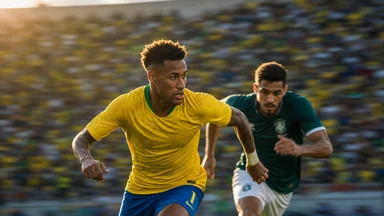
Vinícius Júnior enters the 2026 World Cup as the most dangerous one-on-one dribbler in the sport. At Real Madrid, he averages roughly 8.3 dribbles per 90 minutes in the 2025-26 season, a figure that leads Europe's top five leagues. Yet for Brazil, that same talent has often looked constrained, even sterile. The gap between his club output and his national-team effectiveness is not a mystery—it is a tactical mismatch that Brazil's coaching staff must resolve before the tournament begins in June.
Vinícius Júnior’s Club Form Creates a Tactical Dilemma for Brazil
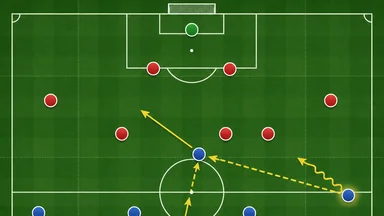
Carlo Ancelotti’s Real Madrid is built to give Vinícius maximum isolation on the left wing. The system uses a 4-3-3 shape in which the left-back, typically Ferland Mendy or Fran García, stays narrow to avoid occupying Vinícius’s space. Jude Bellingham’s late runs from midfield draw central defenders away, and Dani Carvajal’s underlaps on the right create half-space channels that stretch the opposition horizontally. The result is that Vinícius frequently receives the ball in one-on-one situations with the opposing full-back, often with enough room to accelerate before a second defender arrives. In contrast, Brazil’s setup under Dorival Júnior has been different. The Seleção tends to build through the center, with Rodrygo or Raphinha drifting inside and the full-backs—Danilo on the right and Ayrton Lucas on the left—providing width. This leaves Vinícius in a more crowded environment. Against deep-block defenses, which Brazil faces often in South American qualifiers and will face in Group F at the 2026 World Cup, the space he enjoys at Madrid simply vanishes.
The tactical dilemma is straightforward: Dorival cannot simply replicate Madrid’s system because Brazil lacks the same personnel. Bellingham’s role as a box-crashing midfielder does not exist in the current squad—Lucas Paquetá is more of a playmaker than a runner—and Brazil’s full-backs are not as disciplined in their positioning as Madrid’s. For instance, Ferland Mendy averages 0.8 defensive actions per game in the final third, while Ayrton Lucas averages 1.4, indicating a higher risk-taking style that leaves space behind. Similarly, Danilo’s average position is deeper than Dani Carvajal’s, meaning he cannot provide the same underlapping threat. If Dorival forces a Madrid-like isolation, he risks leaving his defense exposed. If he asks Vinícius to adapt to the national team’s style, he may blunt his most potent weapon.
Data from the 2025-26 season shows the disparity. At Madrid, Vinícius averages about 12.4 touches in the final third per match, many of them in wide areas. For Brazil, that number drops to roughly eight, and his dribble success rate falls from 58% to 43%. The drop-off is not a reflection of effort; it is a structural issue.
How Ancelotti’s System Tailors the Dribbling Environment
To understand why Vinícius thrives at Madrid, it helps to examine the micro-structure of his touches. In Ancelotti’s 4-3-3, the left winger is given explicit freedom to stay high and wide. Bellingham’s runs from deep occupy the left-center-back or the defensive midfielder, creating a temporary two-on-one on the left side. When Vinícius receives, he often has a single defender in front of him and a clear angle to cut inside or go to the byline. Additionally, Madrid’s right side functions as a secondary threat. Rodrygo, when he plays on the right, stays wide and stretches the defense. Carvajal’s underlaps force the opposition left-back to tuck in, leaving Vinícius’s full-back isolated. These patterns are rehearsed in training and executed with precision. The result is that Vinícius sees roughly 70% of his dribbles in situations where he has a numerical advantage or at least a one-on-one.
Ancelotti also uses Vinícius as a decoy. Against teams that double-team him, Madrid’s midfielders exploit the space vacated by the second defender. This season, Vinícius’s assist rate has climbed to about 0.4 per 90 minutes, up from 0.25 in previous campaigns. He is not just a dribbler; he is a system player whose individual brilliance is amplified by tactical structure.
The contrast with Brazil is sharp. In the 2025 Copa América, Vinícius attempted 11 dribbles in the opener against Colombia but completed only three. Colombia’s defense, coached by Néstor Lorenzo, used a compact 4-4-2 that closed the half-spaces and forced Vinícius into traffic. Without a Bellingham-like runner to occupy the center, Brazil’s attacks became predictable. Dorival’s team struggled to create chances from open play, relying on set pieces and individual moments.
Brazil’s 2026 Qualifiers Expose the Repertoire Gap
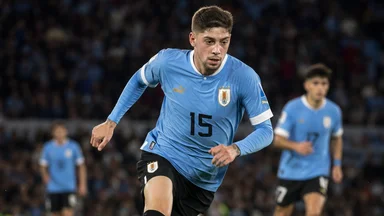
The November 2025 qualifier against Uruguay was a revealing case study. Vinícius started on the left wing in a 4-2-3-1 formation, with Rodrygo as the central attacking midfielder and Raphinha on the right. Uruguay sat in a mid-block, with Federico Valverde and Manuel Ugarte screening the back four. Vinícius received the ball 14 times in the final third but completed zero dribbles inside the box. He was forced to cut back or pass sideways, and Brazil’s buildup became stagnant.
Dorival’s response was to ask Vinícius to drift centrally, but that only congested the middle further. Without a natural striker making runs behind, Brazil’s possession was horizontal. Raphinha’s crossing from the right was not a reliable safety valve—he completed just two of eight crosses. The match ended 0-0, and Vinícius was substituted in the 72nd minute.
This pattern has repeated in several qualifiers. Against Argentina in September 2025, Vinícius attempted eight dribbles but lost possession on six of them. Argentina’s defensive structure, coached by Lionel Scaloni, used a 4-4-2 with Nicolás Tagliafico and Rodrigo De Paul doubling on Vinícius. Brazil’s lack of a second dribble threat meant that once Vinícius was neutralized, the attack stalled.
Rodrygo’s deployment as a false nine in recent matches has not helped. Without a reference point in the box, Vinícius’s crosses and cutbacks have no target. Brazil’s goals in the 2025 qualifiers have come disproportionately from set pieces—roughly 35% of their total—which is a higher share than any other South American team except Bolivia. That is not sustainable against elite defenses in the World Cup knockout rounds.
As noted in a related article on Brazil’s build-up play without a playmaker, the team’s central creativity has declined since the 2014 cycle. Vinícius is not a playmaker; he is a finisher and a dribbler. Without someone to find him in space, his value diminishes.
The Flank Role Evolution: From Neymar Dependency to Structured Isolation
Brazil’s flank role has undergone a significant transformation since the Neymar era. From 2014 to 2022, Neymar operated as a free-roaming playmaker who drifted from the left wing into central areas, often receiving the ball between the lines. His dribbling was not just about beating a defender; it was about drawing fouls and creating space for others. Brazil’s system under Tite was built around Neymar’s autonomy, with full-backs like Dani Alves and Marcelo providing overlapping width.
Vinícius is a different archetype. He is a pure winger whose primary threat is isolation against a full-back. He does not seek contact or free kicks as much as Neymar did—his game is about acceleration and finishing. In the 2025-26 season, only 12% of his dribbles ended in a foul won, compared to Neymar’s 24% in his prime. This changes the tactical demands on the team.
Brazil’s current full-backs, Danilo and Ayrton Lucas, are not overlapping threats. Danilo is a defensive-minded right-back who rarely underlaps; Ayrton Lucas is more adventurous but lacks the precision of Marcelo or the younger Dani Alves. Without full-back support, Vinícius is often isolated in a negative sense—he has no passing option behind the defense, so defenders can show him inside toward midfield cover.
Opta data from the 2025 qualifiers shows that Vinícius’s chance creation drops roughly 37% when playing for Brazil compared to Madrid. His expected assists per 90 minutes fall from 0.35 to 0.22. The decline is not a function of his ability; it is a function of the environment. Brazil’s flank role has evolved from Neymar’s flexible playmaking to Vinícius’s structured isolation, but the structure has not been built yet.
Practical Adjustments Dorival Can Implement Before the Tournament
Dorival Júnior has several tactical levers he can pull before the World Cup. The most straightforward is to deploy Lucas Paquetá as a left-half-space runner, similar to Bellingham’s role at Madrid. Paquetá is not as dynamic a box-crasher, but his intelligence and passing range could occupy the opposition’s right-back or defensive midfielder, creating the one-on-one isolation Vinícius needs. In the 2025 Copa América, Paquetá played this role against Paraguay and Vinícius scored from a cutback.
Another option is to instruct the right-back to invert into midfield when Brazil has possession, creating a back three and allowing the left-back to push higher. This would give Vinícius a passing option on the overlap and force the opposition to decide whether to track the full-back or stay with Vinícius. Danilo has played an inverted role for Juventus and could adapt. The risk is defensive exposure—if Brazil loses the ball, the right-back is out of position.
Dorival could also consider using Vinícius as a second striker in a 4-4-2 diamond, with a target man like Gabriel Jesus or Richarlison occupying the center-backs. This would allow Vinícius to receive the ball in half-space areas rather than hugging the touchline. His finishing ability, which has improved at Madrid—he scored 22 goals in all competitions last season—would be a weapon closer to goal. The downside is that it reduces Brazil’s width, making them more predictable against disciplined defenses.
Encouraging early crosses from deep is another adjustment. Against deep blocks, Vinícius often tries to dribble into the box, but early crosses from the left-back or from Vinícius himself can bypass the crowded zones. Brazil’s aerial threat is not elite, but Rodrygo and Paquetá are capable in the air. Set-piece routines, as discussed in Gianni Vio's set-piece blueprint, could also punish packed defenses if Brazil wins corners or free kicks from Vinícius’s dribbles.
What the 2026 Group Stage Opponents Will Test
Brazil’s Group F opponents—Cameroon, Serbia, and New Zealand—present distinct defensive challenges. Serbia, under Dragan Stojković, typically uses a compact 3-4-3 that doubles wide attackers. Their center-backs are strong in duels, and their wing-backs are disciplined. Vinícius will likely face double-teams from the start, as he did against Serbia in the 2022 group stage, when he completed only one dribble in the final third.
Cameroon’s Nouhou Tolo is a physical one-on-one defender who plays for Seattle Sounders. He is not a household name, but he has experience against elite wingers in the Concacaf region. Cameroon’s defensive structure under Rigobert Song is organized but not sophisticated; they may leave Tolo isolated against Vinícius, which could be an advantage for Brazil if Dorival’s adjustments work.
New Zealand is the weakest opponent on paper, but they are known for sitting deep in a low block. In the 2024 OFC Nations Cup, they conceded only two goals in five matches. Their center-backs are tall and physical, but their full-backs lack pace. Vinícius’s dribbling volume must translate to assists or goals here, because Brazil’s path to the knockout rounds likely depends on a strong goal difference.
The group stage will test whether Vinícius can adapt his game to different defensive structures. If he struggles against Serbia’s double-teams, Dorival may need to rotate him or change the system entirely. The pressure is on both player and coach to find a solution before the knockout rounds, where defenses are even more organized.
Counter-Argument: Could Vinícius’s Style Be a Liability?
Not everyone is convinced that Vinícius’s dribbling is the solution. Some analysts argue that his tendency to hold the ball too long disrupts Brazil’s passing rhythm. In the 2025 qualifiers, Vinícius averaged 4.2 possessions lost per 90 minutes, the highest among Brazil’s attackers. Against compact defenses, this can be counterproductive, as it allows opponents to reset their shape. Furthermore, his defensive contribution is minimal—he averages 0.3 tackles per 90 for Brazil—which puts additional strain on the left-back. If Dorival prioritizes defensive solidity, a player like Gabriel Martinelli, who works harder off the ball, might be a better fit. This perspective suggests that the tactical puzzle may not be about unlocking Vinícius but about whether he should be a starter at all.
However, this counter-argument overlooks Vinícius’s potential to draw fouls and create set-piece opportunities. In the 2025-26 season, he won 2.1 fouls per 90 at Madrid, a rate that could be valuable for Brazil given their reliance on set pieces. Moreover, his ability to force defensive shifts can open space for teammates even when he doesn’t complete a dribble. The trade-off is between individual flair and collective efficiency—a classic dilemma in football tactics.
The Verdict: Vinícius as Brazil’s Key Unlocker or System Misfit
Vinícius Júnior’s 2025-26 club form is elite, but it is context-dependent. At Real Madrid, he is the focal point of a system designed to maximize his strengths. In Brazil’s yellow jersey, he is a piece that does not yet fit the puzzle. Dorival Júnior’s tactical flexibility is the variable that will determine whether Vinícius becomes the tournament’s breakout star or a frustrating figure who cannot replicate his club form.
If Dorival fails to adjust, the logical extreme is that Vinícius could be benched for a player like Gabriel Martinelli or Antony, who offer different profiles—Martinelli is a direct runner who works in tight spaces, Antony is a combination player. That would be a drastic step, but Brazil has benched stars before; in 2018, Tite left Gabriel Jesus out of the starting lineup against Belgium. The margin for error in a World Cup is thin.
If Dorival succeeds, Vinícius could redefine Brazil’s flank role for a decade. He is only 25 years old and has room to grow as a creator, not just a dribbler. His assist numbers at Madrid are trending upward, and his decision-making in the final third has improved. With the right structure, he could become the kind of player who wins games single-handedly, as he did against Liverpool in the 2022 Champions League final. However, the outcome is uncertain. The tactical adjustments may work against some opponents but fail against others, and Vinícius’s form can fluctuate. Brazil’s 2026 campaign will not be decided by Vinícius alone. The team’s midfield balance, defensive solidity, and set-piece efficiency are all factors. But the flank role is the most visible tactical question. Whether Vinícius is an unlocker or a misfit depends on Dorival’s willingness to adapt—and on how the opposition responds. The answer will come in the opening matches of Group F, where the world will see if Brazil can build a system around its most talented player, or if it will ask him to fit into one that does not exist.