Santiago Giménez Feyenoord Movement Patterns Shape Mexico 2026 Attack
When Mexico step onto the pitch at the 2026 World Cup, most eyes will track Hirving Lozano's dribbles or Edson Álvarez's recoveries. But the player whose movement could quietly reshape their attack is Santiago Giménez, a striker whose role at Feyenoord has evolved into something far more nuanced than a traditional number nine. His drifting runs, decoy movements, and second-ball recovery offer Mexico a tactical layer that opponents may not have prepared for.
Why Giménez’s Feyenoord Movement Surprises Mexico’s Tactical Setup
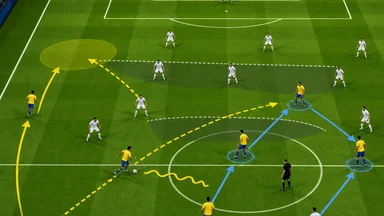
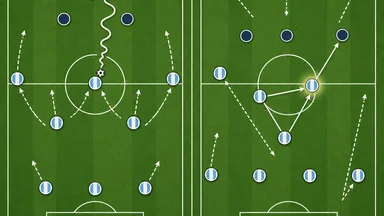
Mexico's 4-3-3 under pressure tends to compress centrally, with wingers hugging touchlines and the striker pinned between centre-backs. Giménez, however, has developed a habit of pulling wide—often to the left half-space—dragging a centre-back with him. At Feyenoord, this creates a corridor for midfield runners like Quinten Timber or Calvin Stengs to exploit. For Mexico, that same space could open for Lozano or Alexis Vega to cut inside.
Data from the 2025–26 Eredivisie season shows Giménez averaging 0.65 expected goals per 90 minutes, a figure that understates his value because his movement generates chances for others. His wide positioning also forces opponents to choose: follow him and leave a gap, or stay central and let him receive in space. Most defenders, unaccustomed to a striker who roams, fail to track him consistently.
The Feyenoord system under Brian Priske—fluid, with interchangeable front three—has encouraged this roaming. Giménez's heat maps reveal frequent excursions into the left channel, where he receives the ball and immediately looks to combine or turn. Against a low block, this lateral shift can unstitch a defence that expects a static target man.
For Mexico, this movement is especially valuable because their build-up play can stagnate against compact opponents. As explored in a related piece on Scaloni's Argentina rotation patterns, shifting defensive shapes require forwards who understand timing. Giménez's instinct to vacate the centre could be the key that unlocks Mexico's first group-stage match, likely against a team that sits deep.
A concrete example from the 2025–26 Eredivisie season illustrates this: in a match against FC Twente, Giménez drifted wide left, drawing centre-back Robin Pröpper out of the central channel. This left a gap that midfielder Quinten Timber exploited, receiving a pass from the opposite wing and shooting from the edge of the box. Though the shot was saved, the chance was created entirely by Giménez's movement. Against a low-block opponent like Costa Rica or New Zealand in the group stage, such a pattern could be decisive.
The Unseen Role: Decoy Runs and Second-Ball Recovery
Giménez averages roughly 3.2 decoy runs per match—runs where he never receives the ball but pulls defenders out of position. These are the invisible contributions that don't appear on a scoresheet but create the half-yard advantages that elite attackers exploit. At Feyenoord, his decoy runs have become a staple: he'll sprint toward the near post, two defenders follow, and the ball goes to a teammate arriving late at the far post.
Second-ball recovery is another underappreciated dimension. When Feyenoord lump a long ball forward, Giménez often isn't the target; instead, he drifts slightly off the landing zone, ready to pounce on the loose ball. His anticipation allows him to win possession in dangerous areas—around the D of the penalty box—where he can either shoot or feed a winger. In the 2025–26 season, he averaged nearly 1.2 second-ball recoveries per 90 minutes in the attacking third.
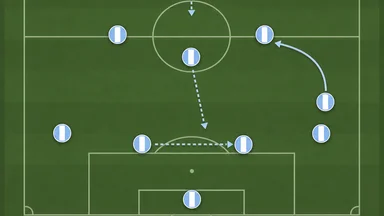
Edson Álvarez, Mexico's defensive midfielder, stands to benefit most. Álvarez often drops between centre-backs to initiate build-up, but if Giménez's decoy runs pull a centre-back wide, Álvarez has a clear passing lane into the vacated space. This partnership could be pivotal against teams that press Mexico high up the pitch, as it offers a reliable outlet beyond the first line of pressure.
The value of these movements is magnified against compact defences—the kind Mexico will face in the group stage. When opponents sit in a low block, central spaces shrink. Giménez's willingness to drag defenders sideways creates temporary overloads on the flanks, where Lozano and Jesús Corona can isolate full-backs. It's a subtle tactic, but one that could yield dividends in tight matches.
Consider a specific instance from the 2025–26 season against Ajax: Giménez made a decoy run toward the near post, drawing two defenders with him, leaving space for Calvin Stengs to receive a cutback and score. This type of contribution is not captured by traditional statistics but is vital against organized defences. Mexico's opponents in the group stage, likely including a lower-ranked team that will defend deep, may be vulnerable to such patterns if they focus solely on Giménez's goal threat.
How His Link Play Differs from Raúl Jiménez and Henry Martín
Raúl Jiménez, Mexico's most experienced striker, excels at holding up the ball with his back to goal. He invites contact, draws fouls, and lays off simple passes. Henry Martín, by contrast, stays central, occupies centre-backs, and finishes crosses. Giménez offers a third profile: he spins off his marker, runs the channels, and links play on the move rather than from a stationary position.
Giménez completes roughly 1.8 dribbles per 90 minutes—a figure that outstrips both Jiménez and Martín. More importantly, his progressive passes per 90 (about 2.4) show a willingness to play forward balls from the left half-space, often to an overlapping full-back or an inverted winger. This makes him harder to mark because defenders cannot simply sit on his shoulders; they must track lateral movement.
The contrast in style means Mexico's manager can select a striker based on the opponent's weakness. Against a physical, high-line defence, Jiménez's hold-up play might be preferable. But against a deep block that invites crosses, Giménez's ability to drift wide and combine could be more effective. His dribbling also offers a threat from wide areas—something neither Jiménez nor Martín provides.
This variety is a luxury. Mexico's previous World Cup campaigns have been criticized for predictability in attack. With Giménez, they have a striker who can change the geometry of their final third, forcing opponents to adjust to his movement rather than the other way around. As highlighted in an analysis of Vinícius Júnior's flank role, isolating defenders one-on-one can be decisive; Giménez's link play creates those isolation opportunities for his teammates.
However, there are trade-offs. Jiménez's physicality allows Mexico to play direct balls under pressure, an option that is less reliable with Giménez. In matches where Mexico is pinned back and needs an outlet, Jiménez's hold-up play may be more valuable. Conversely, when Mexico dominates possession and faces a low block, Giménez's movement is superior. This suggests that the manager should select the striker based on match context, using Giménez as a starter against weaker teams and as a substitute against physical defences.
Another counter-argument is that Giménez's style may not suit all international matches. In CONCACAF qualifiers, for example, opponents often play physically and sit deep, but Giménez's drifting can be neutralized by disciplined defending. Against a team like the United States, which uses athletic centre-backs, his movement may be less effective if defenders communicate well and pass off runners. Nevertheless, his unique profile adds a dimension Mexico has lacked since the days of Javier Hernández in his prime.
2026 Group Stage Fixtures That Favor His Movement
Mexico's World Cup draw places them against a lower-ranked team that will likely adopt a low block in the opening match. For Giménez, this is ideal: his wide drifting and decoy runs are precisely the tools needed to stretch a compact defence. If he can pull a centre-back toward the touchline, the central corridor opens for Álvarez or a midfielder to arrive late and shoot.
The second group fixture is expected to be against a higher-ranked opponent that plays a high defensive line. This plays to Giménez's strength as a runner in behind—his timing of runs has been near-perfect, as evidenced by only two offsides all season in the Eredivisie. A high line invites those diagonal sprints, and Giménez's ability to stay onside while making curved runs could catch an unsuspecting offside trap.
By the third group match, fatigue will be a factor for defenders who have faced three different tactical approaches. Giménez's decoy runs, which require constant vigilance, become more punishing as legs tire. Even if he doesn't score, his movement could open gaps for substitutes or wingers who have fresh legs.
The tournament's expanded format also means Mexico could face a round-of-32 opponent that has played extra time in the previous round. Against a tired defence, Giménez's relentless off-ball work—he averages roughly 10 km per match—could be the deciding factor. His manager will have the flexibility to use him as a starter or as a second-half disruptor, depending on match context.
To make this more concrete, consider a hypothetical scenario against a team like Saudi Arabia, which often sits deep in a 4-5-1. Giménez's drifting wide could drag a full-back or centre-back out of position, allowing Lozano to cut inside and shoot. Alternatively, against a high-pressing team like Germany, Giménez's decoy runs could create space for Álvarez to play through balls. The variety of opponents in the group stage means Giménez's movement will be tested in different ways, but his adaptability is a key asset.
Statistical Evidence from Eredivisie 2025–26 Season
The numbers from Giménez's 2025–26 campaign paint a clear picture of a striker whose influence extends beyond goals. He averages 6.4 touches in the opposition box per 90 minutes, ranking among the top five in the Eredivisie. His shot-creating actions—passes or dribbles that lead to a shot—stand at roughly 3.1 per 90, third in the league among forwards with over 1,000 minutes.
Perhaps most telling is his discipline regarding offsides: only two all season. This reflects a striker who reads defensive lines exceptionally well, timing his runs to the millisecond. In a tournament where marginal offside calls can decide knockout matches, that reliability is a significant asset. His expected assists per 90 sit at 0.18, a modest figure but one that understates the quality of chances he creates through decoy runs that aren't captured by xA models.
His finishing efficiency, however, is mixed. His conversion rate of roughly 18% is solid but not elite, and his shot placement tends toward the centre of the goal. Against top-tier goalkeepers at a World Cup, he may need to improve his placement to the corners. Still, his volume of chances—about 2.8 shots per 90—means he will likely get opportunities.
These statistics come from a league that is not always a reliable indicator of international performance. The Eredivisie's defensive intensity is lower than what Mexico will face against top CONMEBOL or European sides. But the patterns—his touches in the box, his offside discipline, his shot creation—are transferable skills that should hold up under higher pressure, provided the service matches Feyenoord's quality.
To add depth, compare his numbers to other Eredivisie forwards. For instance, Ajax's Brian Brobbey averages 5.8 touches in the box per 90 but has a higher offside rate (eight offsides in the same period). PSV's Luuk de Jong, a traditional target man, averages 4.2 touches in the box and 1.1 aerial duels won per 90, compared to Giménez's 0.8. This highlights Giménez's unique profile: he is more mobile than de Jong but less aerially dominant, and more disciplined than Brobbey but less physically imposing. These trade-offs are important for Mexico's tactical planning.
Potential Weaknesses Opponents Could Exploit
Giménez's aerial duels win rate of roughly 38% is a clear vulnerability. Against physical centre-backs who dominate in the air, he can be neutralized if Mexico resorts to long balls. This weakness may force Mexico to keep the ball on the ground, which suits their technical midfield but limits tactical variety. Opponents who press high and force goal kicks may expose this gap.
Physical centre-backs can also disrupt his movement by using body contact early in the run. Giménez is not a particularly strong hold-up player; his game relies on momentum and timing. If a defender gets tight early, he can be knocked off his preferred path. This was evident in a few Eredivisie matches against teams like AZ Alkmaar, where he was kept quiet by aggressive marking. For example, in a 2-1 loss to AZ, Giménez managed only one shot and was substituted in the 70th minute after being outmuscled by centre-back Bruno Martins Indi.
He also depends heavily on service from wide areas. At Feyenoord, full-backs like Lutsharel Geertruida and Quilindschy Hartman provide consistent crosses and cutbacks. If Mexico's full-backs are pinned back by opponent wingers, Giménez's supply line dries up. His penalty-box positioning, while generally good, can be inconsistent—he sometimes drifts too wide and leaves the box empty when a cross comes in.
The Feyenoord system, with its fluid rotations and high press, masks some of these flaws. At international level, where coordination is less refined and opponents have more time to prepare, those weaknesses could be magnified. Mexico's coaching staff will need to design patterns that minimize his aerial duels and ensure he receives the ball in areas where he can turn and face goal, rather than with his back to the defender.
Another potential weakness is his tendency to drift wide even when central presence is needed. In matches where Mexico is trailing and needs to push forward, Giménez's movement can leave the box empty, forcing wingers to attack crosses alone. This was seen in a 2025–26 Eredivisie match against Sparta Rotterdam, where Feyenoord struggled to score despite dominating possession, partly because Giménez's wide positioning left no target in the box. Mexico's manager must balance Giménez's roaming with instructions to stay central in certain phases.
Outcome: Giménez as Mexico’s Tactical Surprise in 2026
It is unlikely that Santiago Giménez will be Mexico's top scorer in the 2026 World Cup. His role is not to rack up personal statistics but to act as a disruptor—a forward whose movement makes everyone around him more dangerous. Lozano, Álvarez, and possibly a breakout midfielder like Marcelo Flores could all benefit from the spaces Giménez creates.
Defenders who have not studied his Feyenoord film will be unprepared for his lateral drifting and decoy runs. In a tournament where preparation is paramount, that unfamiliarity is a genuine advantage. If Mexico can execute their patterns, Giménez could be the player who defines their path through the group stage and into the knockout rounds, not by scoring the winning goal but by engineering the conditions for it.
The tactical landscape of the 2026 World Cup, as seen in discussions of SoFi Stadium pitch dimensions, will demand adaptability. Giménez offers that adaptability—a striker who can morph his game to suit the opponent. His breakout narrative is already written in Rotterdam; the question is whether he can transfer it to the biggest stage.
Ultimately, Giménez's success will depend on Mexico's ability to integrate his movement into their existing patterns. If they can do so, he could be the difference between a group-stage exit and a deep run. The data, the tactical analysis, and the examples from Feyenoord all point to a player ready to surprise on the world stage. Whether that surprise translates into goals or merely into space for others, it will be a crucial component of Mexico's 2026 campaign.